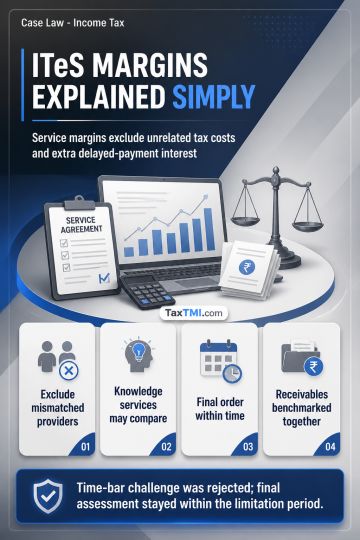
Transfer-pricing treatment of ITeS margins excludes pass-through tax recoveries and separate delayed-receivables interest after working-capital adjust...
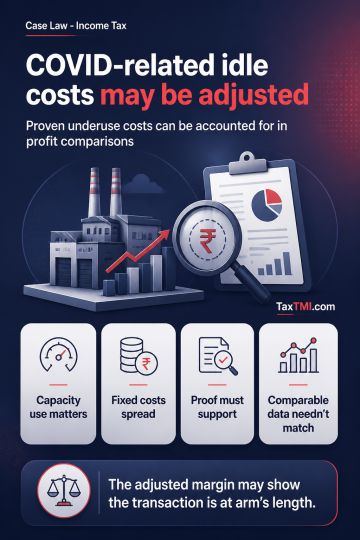
Capacity-utilisation adjustments under TNMM can neutralise substantiated COVID-related idle costs where underutilisation materially affects profitabil...
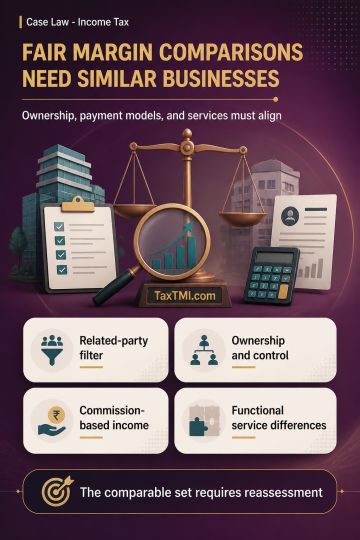
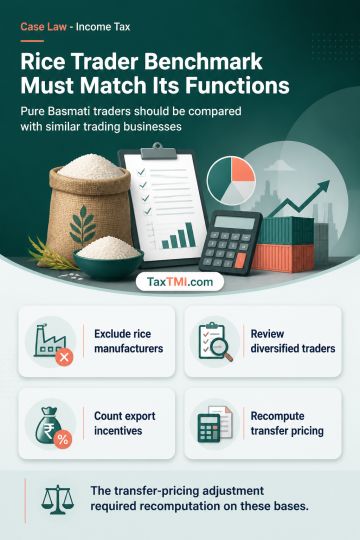
TNMM functional comparability requires excluding rice manufacturers from a pure Basmati rice trader's benchmark and recognising operating export recei...
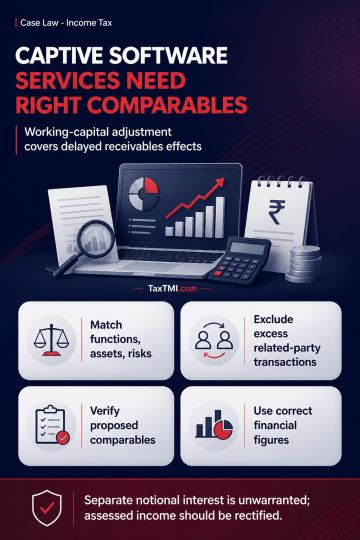
Working-capital adjustment subsumes delayed-receivable effects in TNMM benchmarking of captive software-development services, avoiding separate notion...
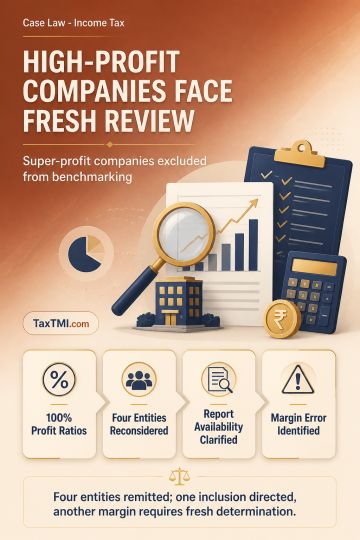
Transfer-pricing comparability requires exclusion of financially illogical super-profit comparables and correction of unsupported annual-report and ma...
Charitable character assessment preserves Section 80G approval despite inclusive spiritual teachings and incidental religious expenditure within the s...
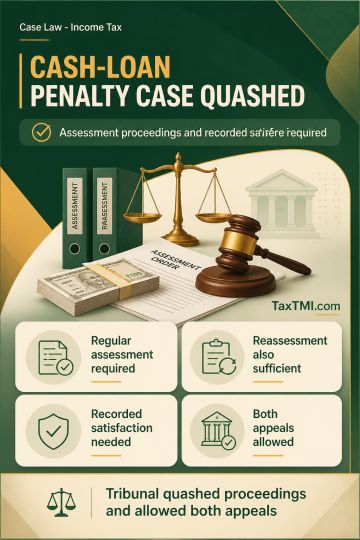
Penalty proceedings for cash-loan acceptance require assessment proceedings and recorded Assessing Officer satisfaction; absent these, the proceedings...
Page of 4828
Press 'Enter' after typing page number.
161 to 180 of 96556 Results
❮
❯
❯❯
0 / 200
Expand Note
Add to Folder
No Folders have been created
+
Are you sure you want to delete "My most important" ?
NCLAT held that repeated non-deposit of amounts deducted from employees' salaries, which were held in trust for remittance to the employees' co-operative society, attracted fraudulent trading liability under Section 66 of the Code. The appellants admitted the deductions and failed to produce reliable material showing any legitimate use of the funds as working capital. The Tribunal further held that proof of personal gain is not essential for fraud; an act or omission intended to deceive or to injure the interests of the corporate debtor or its creditors is sufficient. The finding of liability and the direction for contribution were affirmed.
NCLAT held that repeated non-deposit of amounts deducted from employees' salaries, which were held in trust for remittance to the employees' co-operative society, attracted fraudulent trading liability under Section 66 of the Code. The appellants admitted the deductions and failed to produce reliable material showing any legitimate use of the funds as working capital. The Tribunal further held that proof of personal gain is not essential for fraud; an act or omission intended to deceive or to injure the interests of the corporate debtor or its creditors is sufficient. The finding of liability and the direction for contribution were affirmed.
Note: It is a system-generated summary and is for quick reference only.
 TaxTMI
  TaxTMI
 of 4828






 Join Channel