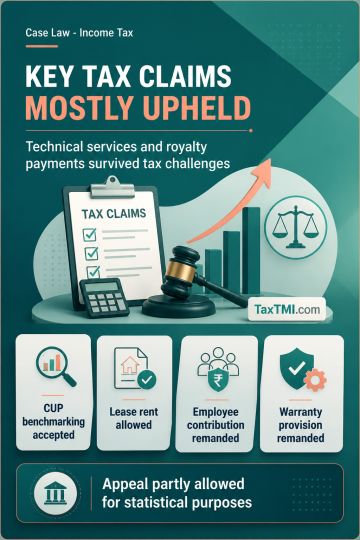
Transfer pricing and tax deductions upheld on established principles, while employee contributions and warranty provisions returned for fresh examinat...
Captive transfer pricing relies on industrial consumer tariffs, while genuine quotations can benchmark effluent treatment transfers under the Other Me...
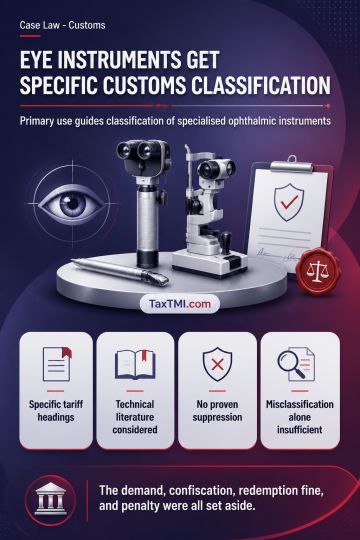
Specific tariff classification for ophthalmic instruments and extended limitation principles determine the treatment of duty demands, confiscation, an...
Integrated golf function determines classification, placing launch monitors and simulators under other golf equipment rather than measuring instrument...
Public servant status under anti-corruption law extends to recognised stock exchange leadership; constitutional and sanction challenges do not succeed...
Acquiescence, homebuyer protection and clean-slate resolution principles prevent landowners from disrupting an integrated project through late termina...
Page of 4817
Press 'Enter' after typing page number.
1501 to 1520 of 96333 Results
❮
❯
❯❯
0 / 200
Expand Note
Add to Folder
No Folders have been created
+
Are you sure you want to delete "My most important" ?
NCLAT held that repeated non-deposit of amounts deducted from employees' salaries, which were held in trust for remittance to the employees' co-operative society, attracted fraudulent trading liability under Section 66 of the Code. The appellants admitted the deductions and failed to produce reliable material showing any legitimate use of the funds as working capital. The Tribunal further held that proof of personal gain is not essential for fraud; an act or omission intended to deceive or to injure the interests of the corporate debtor or its creditors is sufficient. The finding of liability and the direction for contribution were affirmed.
NCLAT held that repeated non-deposit of amounts deducted from employees' salaries, which were held in trust for remittance to the employees' co-operative society, attracted fraudulent trading liability under Section 66 of the Code. The appellants admitted the deductions and failed to produce reliable material showing any legitimate use of the funds as working capital. The Tribunal further held that proof of personal gain is not essential for fraud; an act or omission intended to deceive or to injure the interests of the corporate debtor or its creditors is sufficient. The finding of liability and the direction for contribution were affirmed.
Note: It is a system-generated summary and is for quick reference only.
 TaxTMI
  TaxTMI
 of 4817














 Join Channel