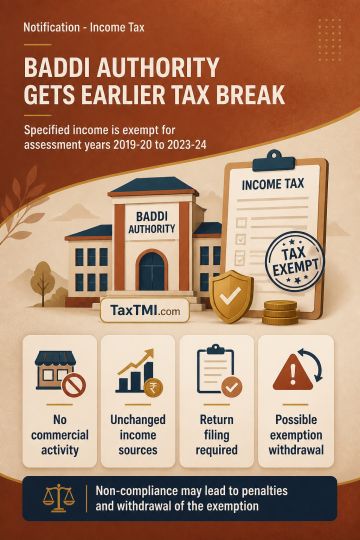
Specified income of Baddi Barotiwala Nalagarh Development Authority receives conditional tax exemption, retrospectively covering its designated assess...
Specified development authority income receives retrospective tax exemption, subject to non-commercial activity, unchanged income sources, and return-...
Unified Brand India framework introduces voluntary Trust Mark certification and funding support for export branding, packaging and global promotional ...
Origin Declaration authentication governs preferential tariff claims under India-UK CETA, requiring a validated reference number before import clearan...
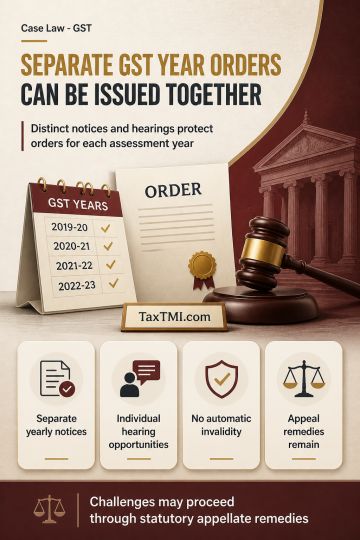
Separate assessment orders for different years remain valid when distinct notices and hearing opportunities prevent prejudice from combined proceeding...
Defined public benefit can retain charitable character; registration renewal requires examining genuine activities and legal compliance, not surplus a...
Capital reduction is distinct from share buy-back, preventing buy-back tax; restructuring interest and related business deductions also survive scruti...
Page of 4817
Press 'Enter' after typing page number.
1481 to 1500 of 96333 Results
❮
❯
❯❯
0 / 200
Expand Note
Add to Folder
No Folders have been created
+
Are you sure you want to delete "My most important" ?
The Tribunal held that the arrangement between the parties was genuine job work for manufacture of Bright Bars, not manpower recruitment or supply service. Applying the control, remuneration, integration and multifactor tests, it found that the contractor retained control over labour, bore the commercial risk, and was paid per output rather than for manpower supplied. On that basis, the service tax demands based on manpower supply were unsustainable. The Tribunal further held that a lawful restructuring of business to reduce tax liability is not a sham or colourable device unless Revenue proves fraud or artificiality, which it failed to do. The impugned orders were set aside and the appeals allowed.
The Tribunal held that the arrangement between the parties was genuine job work for manufacture of Bright Bars, not manpower recruitment or supply service. Applying the control, remuneration, integration and multifactor tests, it found that the contractor retained control over labour, bore the commercial risk, and was paid per output rather than for manpower supplied. On that basis, the service tax demands based on manpower supply were unsustainable. The Tribunal further held that a lawful restructuring of business to reduce tax liability is not a sham or colourable device unless Revenue proves fraud or artificiality, which it failed to do. The impugned orders were set aside and the appeals allowed.
Note: It is a system-generated summary and is for quick reference only.
 TaxTMI
  TaxTMI
 of 4817














 Join Channel