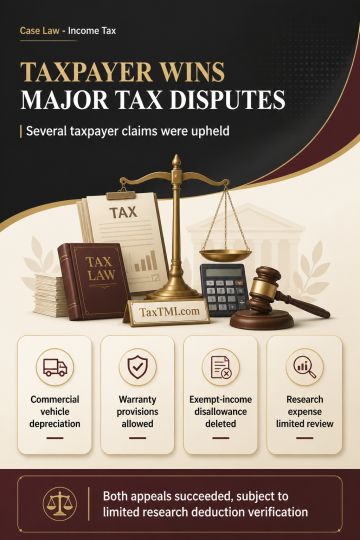
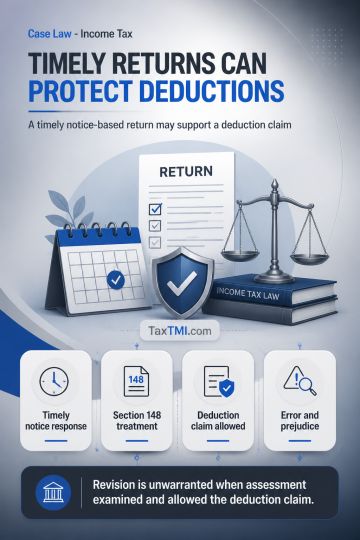
Commercial vehicle depreciation, scientifically determined warranty provisions and exempt-income disallowances were resolved in favour of the taxpayer...
Inherited property sale proceeds require capital-gains treatment where ownership is supported by evidence, not suspicion or unverified signature doubt...
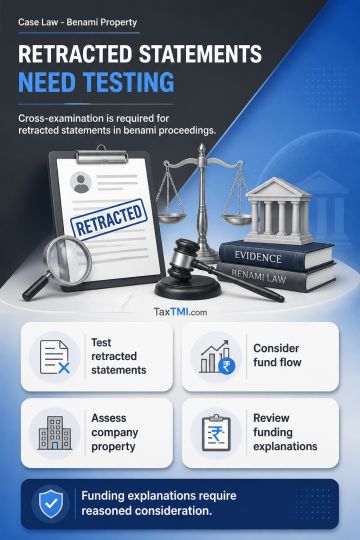
Cross-examination of retracted statements is essential where foundational evidence supports a benami allegation and documented funding explanations re...
A writ petition against a show cause notice was entertained because the matter had been pending for years, pleadings were complete, no further factual enquiry was needed, and the notice itself showed that the amount collected as GST matched the amount paid to the Government. On those admitted facts, the Court treated the issue as a pure question of law on the scope of Section 76 of the CGST Act and held that the provision could not be used to demand tax again merely because payment was made through another GST registration of the same assessee in the same State. Section 76 targets non-remittance of tax collected, not double taxation where the revenue has already received the amount.
A writ petition against a show cause notice was entertained because the matter had been pending for years, pleadings were complete, no further factual enquiry was needed, and the notice itself showed that the amount collected as GST matched the amount paid to the Government. On those admitted facts, the Court treated the issue as a pure question of law on the scope of Section 76 of the CGST Act and held that the provision could not be used to demand tax again merely because payment was made through another GST registration of the same assessee in the same State. Section 76 targets non-remittance of tax collected, not double taxation where the revenue has already received the amount.
Note: It is a system-generated summary and is for quick reference only.
 TaxTMI
  TaxTMI
 of 4821











 Join Channel