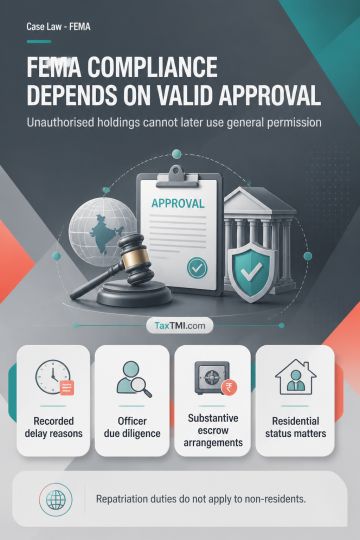
Business expenditure deduction requires proof of genuine commission payments and commercial allowability; turnover growth alone cannot validate the cl...
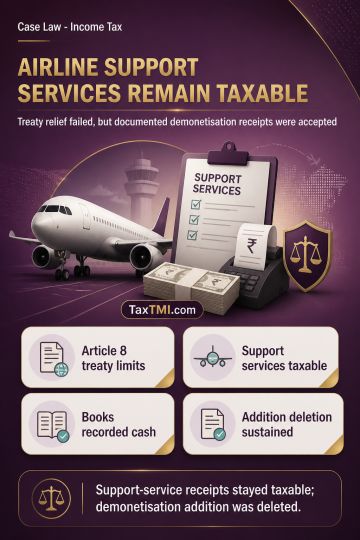
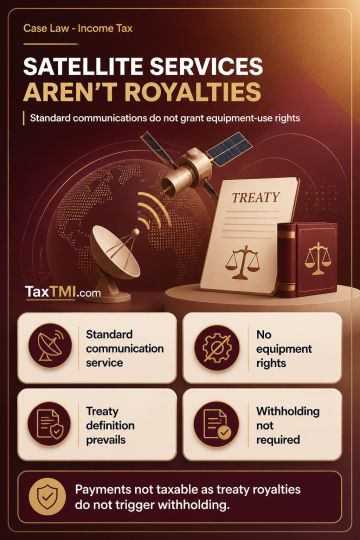
Article 8 treaty coverage excluded third-party airline support services, while documented demonetisation cash receipts remained accepted business inco...
Functional comparability under TNMM requires highway contract benchmarks to reflect operation, maintenance and transfer activities, requiring fresh be...
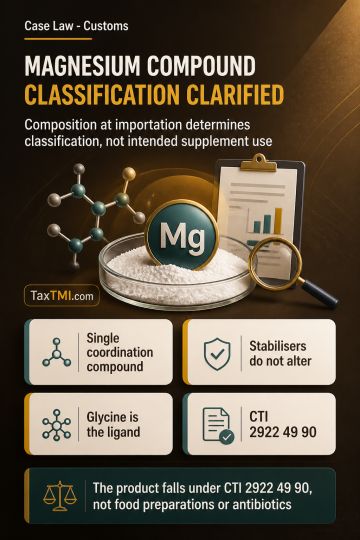
Objective characteristics govern magnesium bis-glycinate chelate classification as an amino-acid coordination compound, not a food preparation or anti...
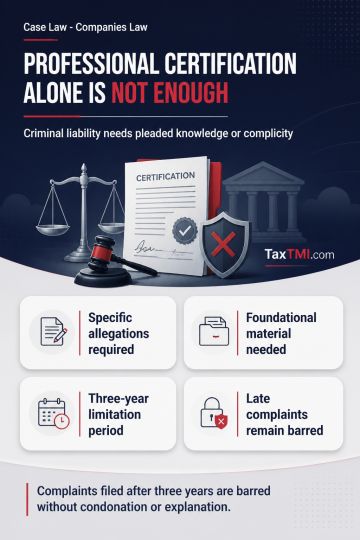
Independent professional certification requires pleaded knowledge or complicity for criminal liability; untimely complaints remain barred by limitatio...
A Joint Commissioner who had issued the show-cause notice before a later circular could validly pass the Order-in-Original imposing penalty for fraudulent availment and passing of ITC, since the proceedings had been initiated under Section 74 and the same officer had jurisdiction on the date of adjudication. The Court held that Section 160 of the CGST Act cured mere procedural defects or omissions where the proceedings were otherwise in substance in conformity with the Act. It also noted that the petitioner had not effectively contested jurisdiction at the notice stage or participated in the proceedings, so the objection was untenable. The writ challenge failed, with liberty to pursue the statutory appeal.
A Joint Commissioner who had issued the show-cause notice before a later circular could validly pass the Order-in-Original imposing penalty for fraudulent availment and passing of ITC, since the proceedings had been initiated under Section 74 and the same officer had jurisdiction on the date of adjudication. The Court held that Section 160 of the CGST Act cured mere procedural defects or omissions where the proceedings were otherwise in substance in conformity with the Act. It also noted that the petitioner had not effectively contested jurisdiction at the notice stage or participated in the proceedings, so the objection was untenable. The writ challenge failed, with liberty to pursue the statutory appeal.
Note: It is a system-generated summary and is for quick reference only.
 TaxTMI
  TaxTMI
 of 4824






 Join Channel