Patent-settlement expenditure treated as commercially expedient revenue outlay, with foreign-law restrictions inapplicable before the prospective amen...
International transaction benchmarking restricts transfer pricing adjustments to associated-enterprise dealings, while functional comparability govern...
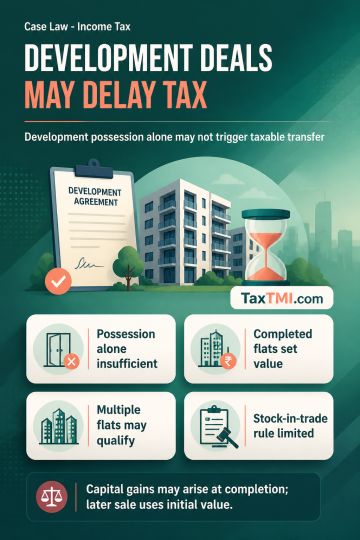
Joint development agreements defer taxable transfer where possession lacks part performance, while completed flats determine consideration and exempti...
Penalty under section 270A(2)(b) was deleted where executors could not file the deceased assessee's return before probate was granted. The Tribunal accepted that, under section 270A(6), the explanation was reasonable and bona fide because the delay arose from circumstances beyond the executors' control, including the absence of court appointment and the time taken to obtain probate. It also noted that the obligation on legal heirs or executors to file the return arises only after receipt of the court order appointing them, and the relevant period was covered by the Supreme Court's COVID-related limitation extension. The penalty was therefore unsustainable.
Penalty under section 270A(2)(b) was deleted where executors could not file the deceased assessee's return before probate was granted. The Tribunal accepted that, under section 270A(6), the explanation was reasonable and bona fide because the delay arose from circumstances beyond the executors' control, including the absence of court appointment and the time taken to obtain probate. It also noted that the obligation on legal heirs or executors to file the return arises only after receipt of the court order appointing them, and the relevant period was covered by the Supreme Court's COVID-related limitation extension. The penalty was therefore unsustainable.
Note: It is a system-generated summary and is for quick reference only.
 TaxTMI
  TaxTMI
 of 4830













 Join Channel


