Specified development authority income receives retrospective tax exemption, subject to non-commercial activity, unchanged income sources, and return-...
Unified Brand India framework introduces voluntary Trust Mark certification and funding support for export branding, packaging and global promotional ...
Origin Declaration authentication governs preferential tariff claims under India-UK CETA, requiring a validated reference number before import clearan...
Separate assessment orders for different years remain valid when distinct notices and hearing opportunities prevent prejudice from combined proceeding...
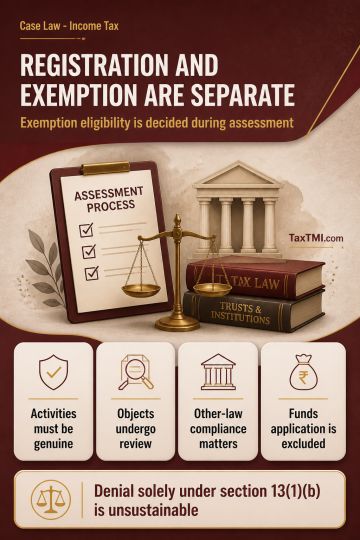
Defined public benefit can retain charitable character; registration renewal requires examining genuine activities and legal compliance, not surplus a...
Capital reduction is distinct from share buy-back, preventing buy-back tax; restructuring interest and related business deductions also survive scruti...
No prescribed limitation period governed petitions under the Companies Act before the Company Law Board, but unexplained delay could still matter where relief is discretionary; on these facts, the grievance concerned a continuing course of oppression and mismanagement, so delay, laches, acquiescence and estoppel did not bar scrutiny. The Board could examine fraud and forgery on the record where the material disclosed mala fide exclusion, and its findings on shareholding, clandestine meetings and oppressive conduct were not perverse under Section 10F because they rested on company records and correspondence. Additional evidence under Order XLI Rule 27 required due diligence and necessity, which were not shown. The special auditor direction was only consequential and was upheld.
No prescribed limitation period governed petitions under the Companies Act before the Company Law Board, but unexplained delay could still matter where relief is discretionary; on these facts, the grievance concerned a continuing course of oppression and mismanagement, so delay, laches, acquiescence and estoppel did not bar scrutiny. The Board could examine fraud and forgery on the record where the material disclosed mala fide exclusion, and its findings on shareholding, clandestine meetings and oppressive conduct were not perverse under Section 10F because they rested on company records and correspondence. Additional evidence under Order XLI Rule 27 required due diligence and necessity, which were not shown. The special auditor direction was only consequential and was upheld.
Note: It is a system-generated summary and is for quick reference only.
 TaxTMI
  TaxTMI
 of 4817



















 Join Channel


