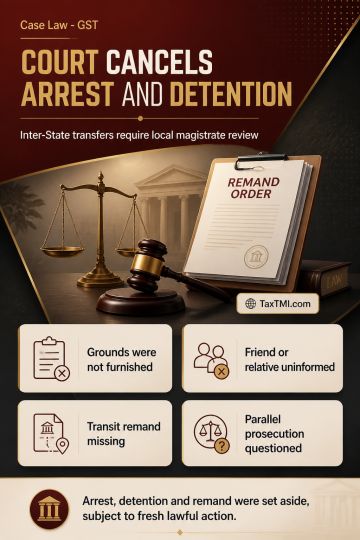
Arrest safeguards and transit remand requirements invalidated detention following inter-State transfer without communicated grounds or magistrate auth...
Arrest safeguards require disclosed grounds, relative intimation and transit remand, while duplicate prosecution under the CGST framework is unsustain...
Document Identification Number defects can invalidate GST assessments, with delayed challenges entertained conditionally where patent irregularities e...
Windmill commissioning evidence supported higher depreciation where grid connection and electricity generation proved operational use before the relev...
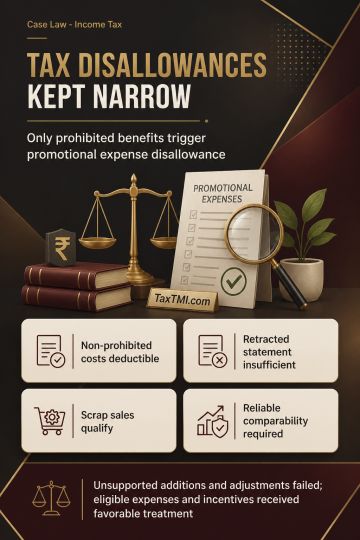
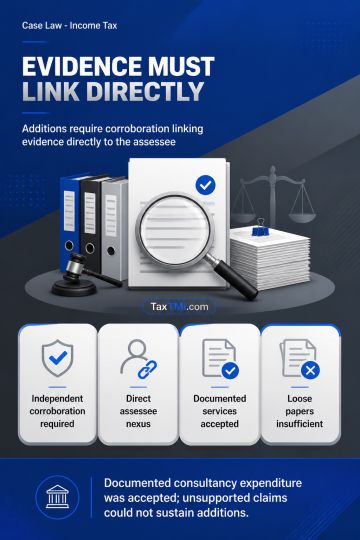
Pharmaceutical promotion and transfer-pricing comparability principles limited disallowances, while uncorroborated search allegations and unsupported ...
Business expenditure substantiation supports scrap credits, statutory payments and expense claims, while depreciation requires proof of actual busines...
No prescribed limitation period governed petitions under the Companies Act before the Company Law Board, but unexplained delay could still matter where relief is discretionary; on these facts, the grievance concerned a continuing course of oppression and mismanagement, so delay, laches, acquiescence and estoppel did not bar scrutiny. The Board could examine fraud and forgery on the record where the material disclosed mala fide exclusion, and its findings on shareholding, clandestine meetings and oppressive conduct were not perverse under Section 10F because they rested on company records and correspondence. Additional evidence under Order XLI Rule 27 required due diligence and necessity, which were not shown. The special auditor direction was only consequential and was upheld.
No prescribed limitation period governed petitions under the Companies Act before the Company Law Board, but unexplained delay could still matter where relief is discretionary; on these facts, the grievance concerned a continuing course of oppression and mismanagement, so delay, laches, acquiescence and estoppel did not bar scrutiny. The Board could examine fraud and forgery on the record where the material disclosed mala fide exclusion, and its findings on shareholding, clandestine meetings and oppressive conduct were not perverse under Section 10F because they rested on company records and correspondence. Additional evidence under Order XLI Rule 27 required due diligence and necessity, which were not shown. The special auditor direction was only consequential and was upheld.
Note: It is a system-generated summary and is for quick reference only.
 TaxTMI
  TaxTMI
 of 4817


















 Join Channel