Dispute Resolution Panel objections must reach both prescribed forums; otherwise assessment may proceed and statutory appeal remains the proper remedy...
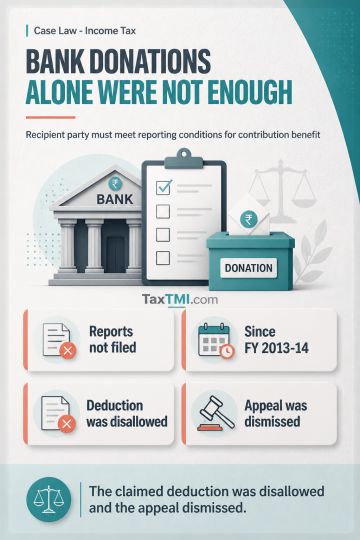
Political contribution deductions require recipient party compliance with contribution-reporting conditions; banking-channel donations alone do not qu...
Aggregation under TNMM prevents selective testing of intra-group services without comparable uncontrolled transactions, while appellate additional cla...
Protective assessment cannot duplicate identical receipts under competing characterisations; remote services did not establish a taxable permanent est...
Current account treatment of overseas tournament services removed most FEMA findings, but excess EEFC remittance and delayed repatriation remained bre...
No prescribed limitation period governed petitions under the Companies Act before the Company Law Board, but unexplained delay could still matter where relief is discretionary; on these facts, the grievance concerned a continuing course of oppression and mismanagement, so delay, laches, acquiescence and estoppel did not bar scrutiny. The Board could examine fraud and forgery on the record where the material disclosed mala fide exclusion, and its findings on shareholding, clandestine meetings and oppressive conduct were not perverse under Section 10F because they rested on company records and correspondence. Additional evidence under Order XLI Rule 27 required due diligence and necessity, which were not shown. The special auditor direction was only consequential and was upheld.
No prescribed limitation period governed petitions under the Companies Act before the Company Law Board, but unexplained delay could still matter where relief is discretionary; on these facts, the grievance concerned a continuing course of oppression and mismanagement, so delay, laches, acquiescence and estoppel did not bar scrutiny. The Board could examine fraud and forgery on the record where the material disclosed mala fide exclusion, and its findings on shareholding, clandestine meetings and oppressive conduct were not perverse under Section 10F because they rested on company records and correspondence. Additional evidence under Order XLI Rule 27 required due diligence and necessity, which were not shown. The special auditor direction was only consequential and was upheld.
Note: It is a system-generated summary and is for quick reference only.
 TaxTMI
  TaxTMI
 of 4819


















 Join Channel