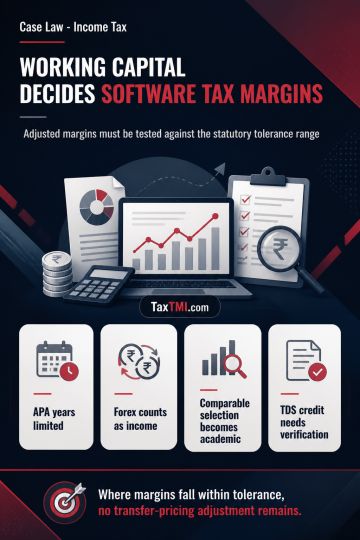
Working-capital adjustment determines whether software-services transfer-pricing margins fall within the statutory tolerance range, eliminating any ad...
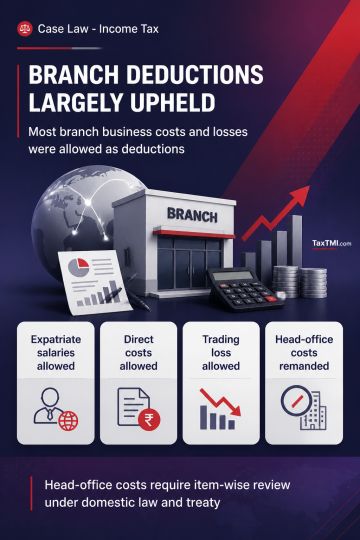
Permanent establishment deductions upheld for expatriate salaries, direct costs and trading losses, while head-office costs require fresh classificati...
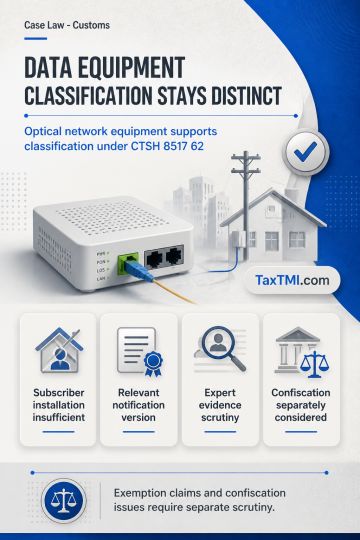
Data transmission equipment classification under CTSH 8517 62 remains distinct from residual classification, with exemption evidence requiring scrutin...
A bank receiving cheques for collection acts as the customer's agent and must exercise due diligence in presenting them within the validity period; once a temporary obstacle such as a strike ends, the cheques must be re-presented within a reasonable time. Failure to do so, resulting in stale cheques, amounts to negligence and deficiency in service under consumer law, and the concurrent finding of deficiency was upheld. On compensation, consumer redress must be fair and commensurate with the proved loss; because the downstream consequences of timely dishonour remained uncertain, token compensation was appropriate. The award was therefore reduced from 10 percent to 6 percent of the cheque amount, with interest also reduced to 6 percent per annum.
A bank receiving cheques for collection acts as the customer's agent and must exercise due diligence in presenting them within the validity period; once a temporary obstacle such as a strike ends, the cheques must be re-presented within a reasonable time. Failure to do so, resulting in stale cheques, amounts to negligence and deficiency in service under consumer law, and the concurrent finding of deficiency was upheld. On compensation, consumer redress must be fair and commensurate with the proved loss; because the downstream consequences of timely dishonour remained uncertain, token compensation was appropriate. The award was therefore reduced from 10 percent to 6 percent of the cheque amount, with interest also reduced to 6 percent per annum.
Note: It is a system-generated summary and is for quick reference only.
 TaxTMI
  TaxTMI
 of 4819








 Join Channel