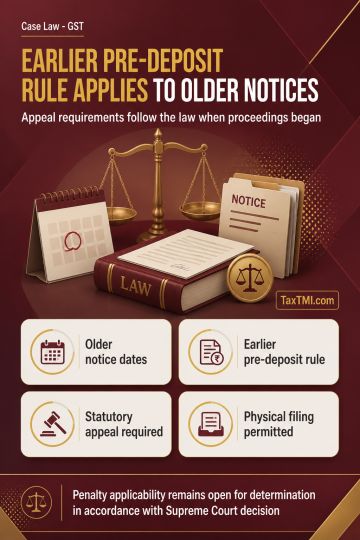
Statutory sanction for delayed reassessment requires approval from the prescribed authority; approval by an inferior authority invalidates jurisdictio...
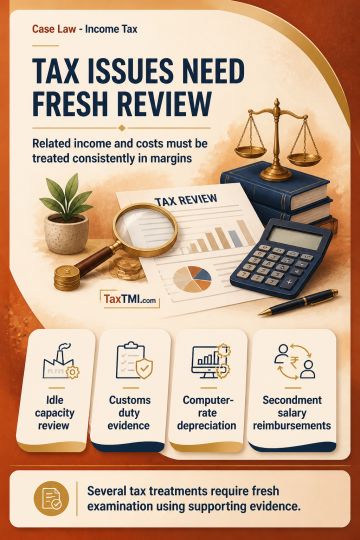
Transfer pricing margin adjustments require matching treatment of non-operating income and related costs, with comparability issues reconsidered on ev...
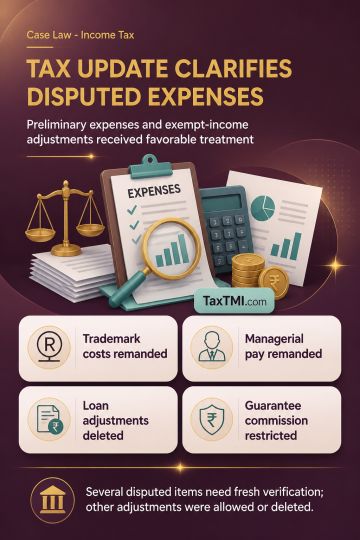
Preliminary-expense amortisation and MAT exempt-income adjustments prevailed, while trademark costs and managerial remuneration require fresh verifica...
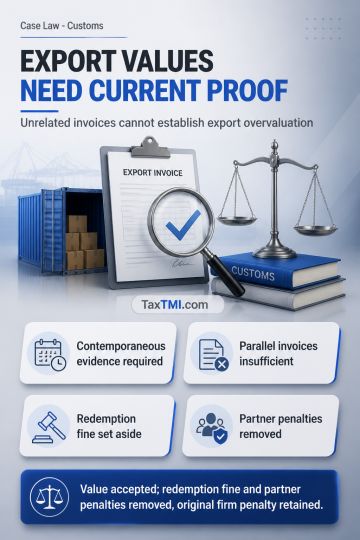
Export valuation requires contemporaneous evidence; unrelated invoices cannot prove overvaluation, and dual penalties on firm and partner are impermis...
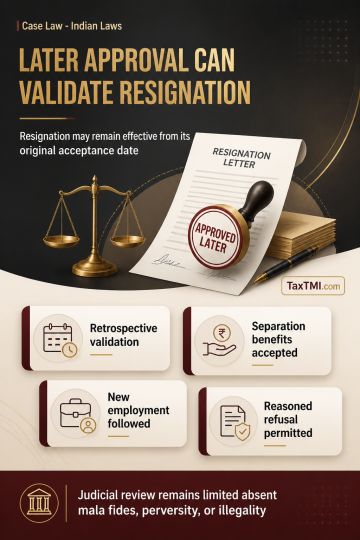
Ratification of resignation acceptance validates separation retrospectively, while withdrawal may be refused through reasoned administrative discretio...
Nature-dependent electricity contracts receive new Ind AS accounting, hedge designation, transition and financial-statement disclosure requirements fr...
A bank receiving cheques for collection acts as the customer's agent and must exercise due diligence in presenting them within the validity period; once a temporary obstacle such as a strike ends, the cheques must be re-presented within a reasonable time. Failure to do so, resulting in stale cheques, amounts to negligence and deficiency in service under consumer law, and the concurrent finding of deficiency was upheld. On compensation, consumer redress must be fair and commensurate with the proved loss; because the downstream consequences of timely dishonour remained uncertain, token compensation was appropriate. The award was therefore reduced from 10 percent to 6 percent of the cheque amount, with interest also reduced to 6 percent per annum.
A bank receiving cheques for collection acts as the customer's agent and must exercise due diligence in presenting them within the validity period; once a temporary obstacle such as a strike ends, the cheques must be re-presented within a reasonable time. Failure to do so, resulting in stale cheques, amounts to negligence and deficiency in service under consumer law, and the concurrent finding of deficiency was upheld. On compensation, consumer redress must be fair and commensurate with the proved loss; because the downstream consequences of timely dishonour remained uncertain, token compensation was appropriate. The award was therefore reduced from 10 percent to 6 percent of the cheque amount, with interest also reduced to 6 percent per annum.
Note: It is a system-generated summary and is for quick reference only.
 TaxTMI
  TaxTMI
 of 4826










 Join Channel