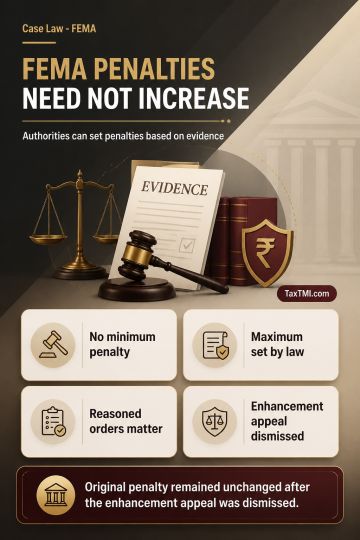
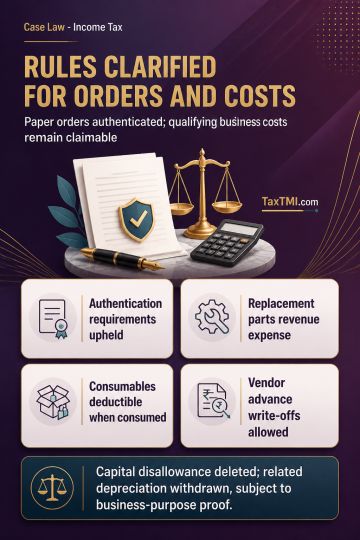
Authentication of paper assessment orders upheld, while qualifying repairs, consumables and vendor advance write-offs remain deductible business claim...
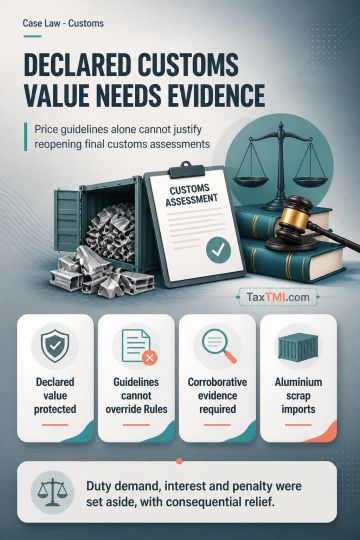
Transaction value cannot be rejected solely on non-statutory valuation guidelines without corroborative evidence supporting reassessment of final cust...
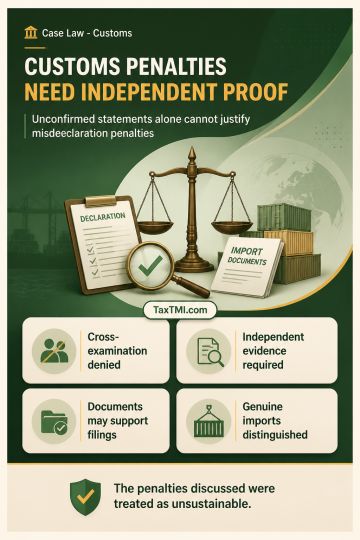
Cross-examination rights and corroborated evidence limit customs penalties for misdeclaration in genuine import transactions involving documented clea...
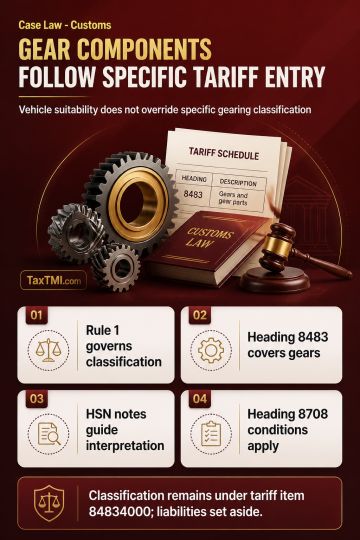
Tariff classification of vehicle gear components follows the specific gearing entry, displacing motor-vehicle parts classification and related liabili...
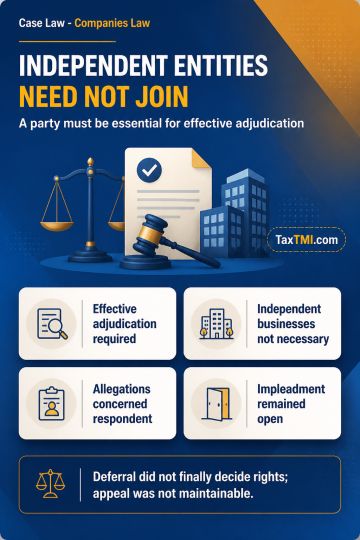
Necessary-party requirements limit impleadment of independent entities, while deferred consideration does not create an appealable adverse determinati...
Existence of an efficacious statutory appeal under the CGST Act justified refusal of writ jurisdiction against GST adjudication orders passed by municipal bodies. The Court found that the challenge was not a case of lack of jurisdiction, because the alleged GST immunity depended on examination of the underlying transactions and the adjudicating authority had already undertaken that factual exercise. As no exceptional circumstance, including a vires challenge, was shown, the petitioners were relegated to the appellate remedy. Appeals filed within the time granted and with statutory compliances were to be heard on merits without objection on limitation, and all substantive contentions were left open.
Existence of an efficacious statutory appeal under the CGST Act justified refusal of writ jurisdiction against GST adjudication orders passed by municipal bodies. The Court found that the challenge was not a case of lack of jurisdiction, because the alleged GST immunity depended on examination of the underlying transactions and the adjudicating authority had already undertaken that factual exercise. As no exceptional circumstance, including a vires challenge, was shown, the petitioners were relegated to the appellate remedy. Appeals filed within the time granted and with statutory compliances were to be heard on merits without objection on limitation, and all substantive contentions were left open.
Note: It is a system-generated summary and is for quick reference only.
 TaxTMI
  TaxTMI
 of 4821






 Join Channel