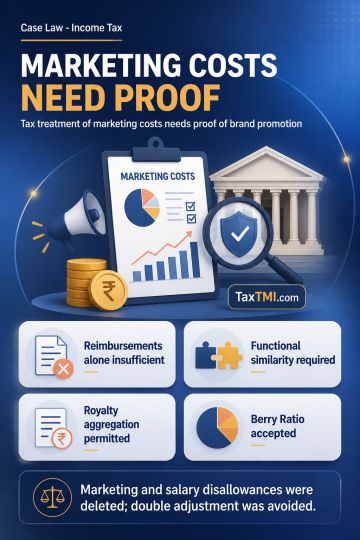
Transfer pricing requires evidence for AMP transactions, functionally reliable comparables, and appropriate aggregation or Berry Ratio benchmarking me...
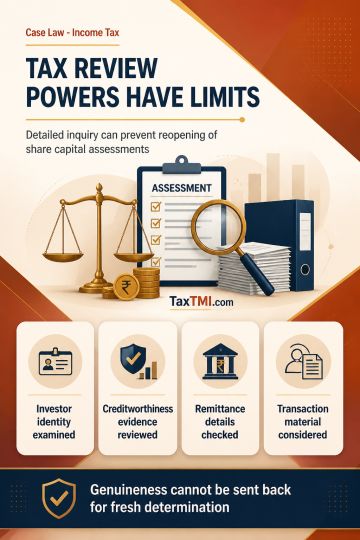
Revisionary jurisdiction cannot reopen share capital assessments where adequate inquiry supports a permissible view and no independent error is establ...
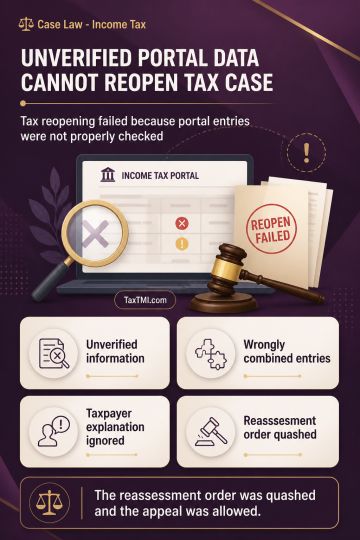
Reassessment jurisdiction fails where unverified portal information is aggregated without examining the taxpayer's explanation or relevance of entries...
Statutory sanction for delayed reassessment requires approval from the prescribed authority; approval by an inferior authority invalidates jurisdictio...
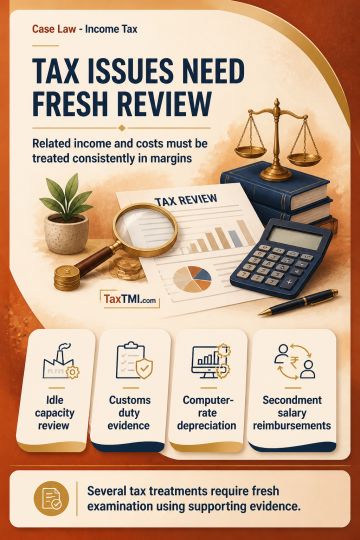
Transfer pricing margin adjustments require matching treatment of non-operating income and related costs, with comparability issues reconsidered on ev...
Preliminary-expense amortisation and MAT exempt-income adjustments prevailed, while trademark costs and managerial remuneration require fresh verifica...
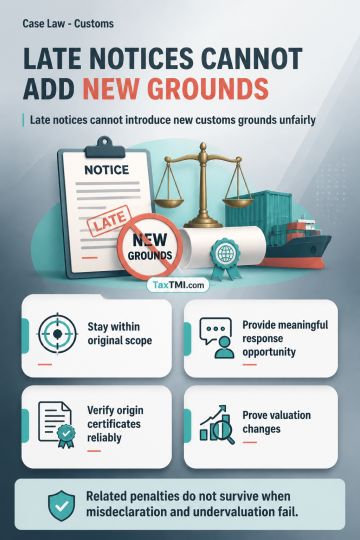
Export valuation requires contemporaneous evidence; unrelated invoices cannot prove overvaluation, and dual penalties on firm and partner are impermis...
Franchise fee paid to secure participation rights in the Indian Premier League was treated as revenue expenditure, as the Tribunal followed coordinate bench decisions in the assessee's own earlier years and found no distinguishing feature or reversal of those rulings. The alternative depreciation claim was therefore academic. On payments to a New Zealand resident talent scout, the Tribunal found the arrangement prima facie consistent with independent personal services under Article 14 of the India-New Zealand DTAA and noted that the 183-day condition was satisfied, but remanded the matter for limited verification of whether the consultant had a fixed base in India. If Article 14 conditions are met, no TDS liability arises.
Franchise fee paid to secure participation rights in the Indian Premier League was treated as revenue expenditure, as the Tribunal followed coordinate bench decisions in the assessee's own earlier years and found no distinguishing feature or reversal of those rulings. The alternative depreciation claim was therefore academic. On payments to a New Zealand resident talent scout, the Tribunal found the arrangement prima facie consistent with independent personal services under Article 14 of the India-New Zealand DTAA and noted that the 183-day condition was satisfied, but remanded the matter for limited verification of whether the consultant had a fixed base in India. If Article 14 conditions are met, no TDS liability arises.
Note: It is a system-generated summary and is for quick reference only.
 TaxTMI
  TaxTMI
 of 4828












 Join Channel


