Patent-settlement expenditure treated as commercially expedient revenue outlay, with foreign-law restrictions inapplicable before the prospective amen...
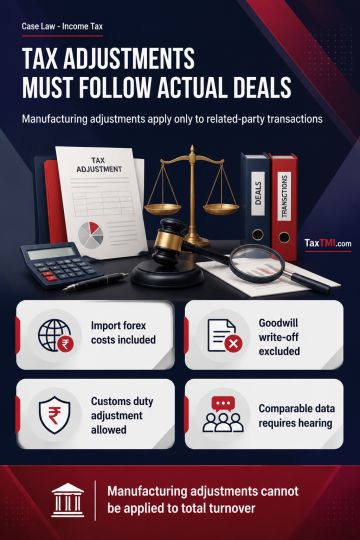
International transaction benchmarking restricts transfer pricing adjustments to associated-enterprise dealings, while functional comparability govern...
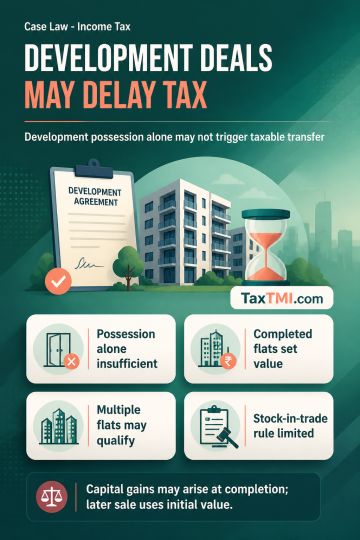
Joint development agreements defer taxable transfer where possession lacks part performance, while completed flats determine consideration and exempti...
Passenger baggage re-export requires true declaration and cannot be granted indirectly through discretionary redemption of undeclared prohibited goods...
Page of 4821
Press 'Enter' after typing page number.
861 to 880 of 96406 Results
❮
❯
❯❯
0 / 200
Expand Note
Add to Folder
No Folders have been created
+
Are you sure you want to delete "My most important" ?
Writ jurisdiction under Article 226 was declined against a show cause notice and consequential order under section 74 of the CGST Act because an efficacious statutory appeal was available under section 107 read with Rule 109A. The Court held that challenges requiring examination of the corrigendum, the underlying material, and the nature of the correction involved factual appreciation and therefore did not fall within the limited certiorari jurisdiction. Mere disagreement with the adjudicating authority's conclusions was insufficient to bypass the appellate remedy. The Court also noted that recognised exceptional grounds such as breach of fundamental rights, natural justice violations, excess of jurisdiction, or challenge to vires were not made out on the material before it, and it expressed no opinion on the merits.
Writ jurisdiction under Article 226 was declined against a show cause notice and consequential order under section 74 of the CGST Act because an efficacious statutory appeal was available under section 107 read with Rule 109A. The Court held that challenges requiring examination of the corrigendum, the underlying material, and the nature of the correction involved factual appreciation and therefore did not fall within the limited certiorari jurisdiction. Mere disagreement with the adjudicating authority's conclusions was insufficient to bypass the appellate remedy. The Court also noted that recognised exceptional grounds such as breach of fundamental rights, natural justice violations, excess of jurisdiction, or challenge to vires were not made out on the material before it, and it expressed no opinion on the merits.
Note: It is a system-generated summary and is for quick reference only.
 TaxTMI
  TaxTMI
 of 4821












 Join Channel