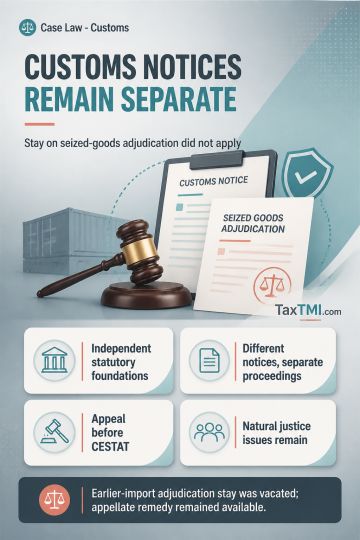
Independent show-cause notices remain separate proceedings, while customs adjudication challenges should ordinarily follow the statutory appellate rem...
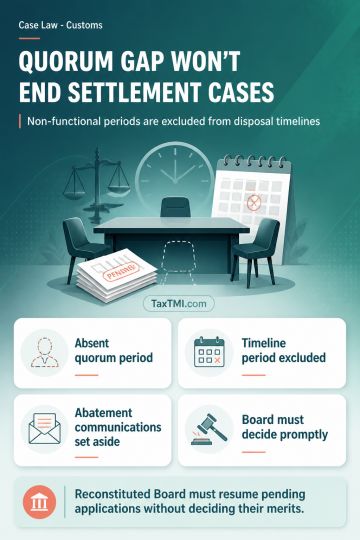
Institutional incapacity in customs settlement proceedings excludes non-functional quorum periods from statutory disposal timelines, preventing automa...
Interactive touchscreen panels with integrated computing functions fall under automatic data-processing machines rather than display monitors for cust...
Ex parte injunction service requirements were substantially met, while civil recovery and SFIO investigation into provident fund defalcation continued...
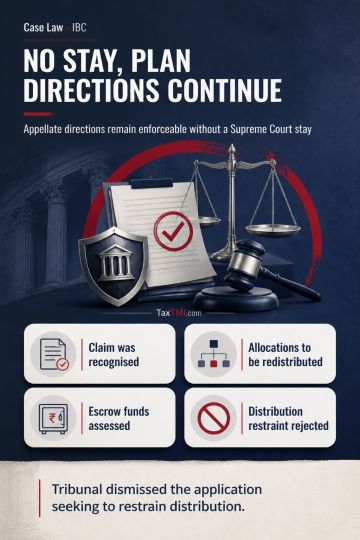
Enforcement of resolution-plan directions continues without a Supreme Court stay, preventing suspension of redistribution and escrowed-fund distributi...
Third-party ownership claims over attached property require Special Court adjudication where purchasers lack registered sale deeds and bona fides rema...
Pure-agent reimbursements in clearing and forwarding services are excluded from taxable value when qualifying third-party payments are properly record...
Regular bail was granted in an economic offence involving alleged fraudulent availment of input tax credit under the CGST Act because the prosecution's case rested mainly on documentary material already in its possession. The investigation was found to be substantially complete, and no further custodial interrogation was shown to be necessary. The court also noted that the alleged offence carried a maximum punishment of five years, was compoundable, and that no specific risk of tampering with evidence or influencing witnesses was demonstrated, especially where the evidence was largely documentary. Bail was therefore allowed on bond and surety terms.
Regular bail was granted in an economic offence involving alleged fraudulent availment of input tax credit under the CGST Act because the prosecution's case rested mainly on documentary material already in its possession. The investigation was found to be substantially complete, and no further custodial interrogation was shown to be necessary. The court also noted that the alleged offence carried a maximum punishment of five years, was compoundable, and that no specific risk of tampering with evidence or influencing witnesses was demonstrated, especially where the evidence was largely documentary. Bail was therefore allowed on bond and surety terms.
Note: It is a system-generated summary and is for quick reference only.
 TaxTMI
  TaxTMI
 of 4828















 Join Channel


