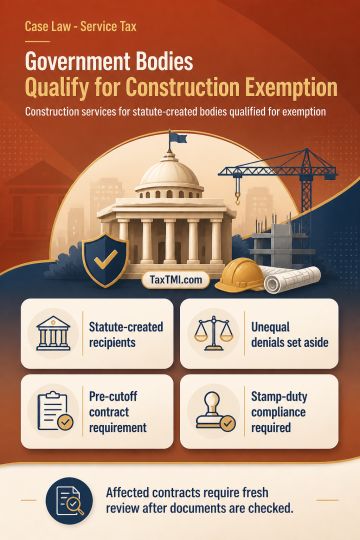
Governmental authority status supports construction-service exemption, while pre-cutoff contract and stamp-duty compliance requires verification on re...
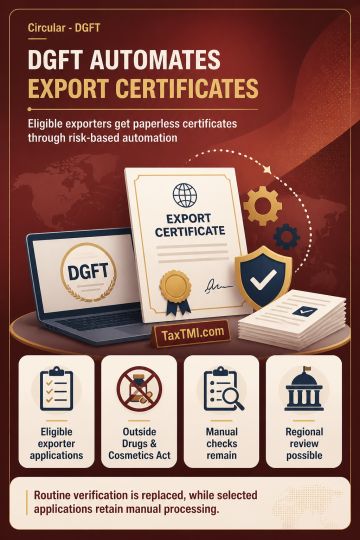
Automated Free Sale and Commerce Certificates enable paperless processing while retaining risk-based manual verification for selected exporter applica...
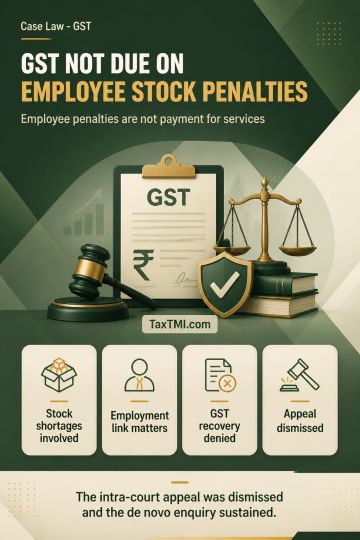
Employee stock-shortage penalties do not constitute consideration for services, preventing GST collection under Schedule II in employment relationship...
The High Court held that a customs broker who merely filed documents supplied by the importer had acted as a ministerial conduit, with no evidence of knowledge, intentional suppression, or participation in fraud. Those findings were factual and showed no perversity, so no substantial question of law arose under Section 130 of the Customs Act. The Court also held that, because the penalty against the respondent had been set aside in full, there was no quantified liability surviving against him and the Revenue could not rely on the investigation's overall value or the importer's separate liability to cross the monetary threshold for appeal. The appeal was not admitted and was dismissed.
The High Court held that a customs broker who merely filed documents supplied by the importer had acted as a ministerial conduit, with no evidence of knowledge, intentional suppression, or participation in fraud. Those findings were factual and showed no perversity, so no substantial question of law arose under Section 130 of the Customs Act. The Court also held that, because the penalty against the respondent had been set aside in full, there was no quantified liability surviving against him and the Revenue could not rely on the investigation's overall value or the importer's separate liability to cross the monetary threshold for appeal. The appeal was not admitted and was dismissed.
Note: It is a system-generated summary and is for quick reference only.
 TaxTMI
  TaxTMI
 of 4828





 Join Channel


