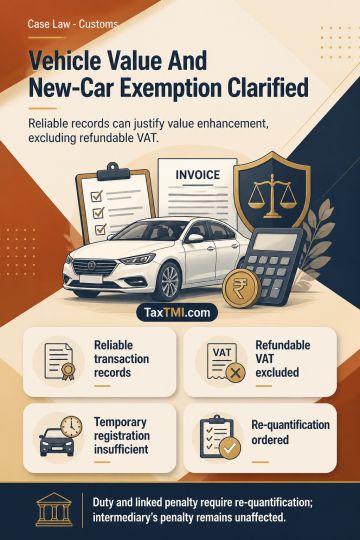
Transaction value rejection requires reliable corroboration; refundable VAT is excluded and temporary registration does not defeat new-vehicle exempti...
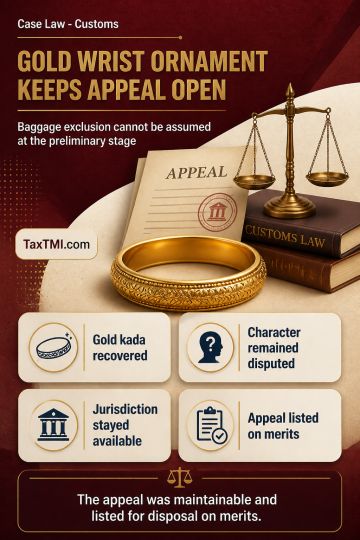
Appellate jurisdiction remains available where a wrist-worn gold ornament cannot conclusively be characterised as imported baggage at the preliminary ...
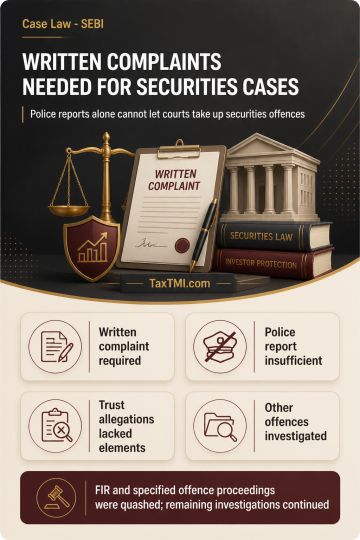
Written complaint requirement bars cognizance on police reports for securities offences, while unsupported breach of trust and cheating allegations fa...
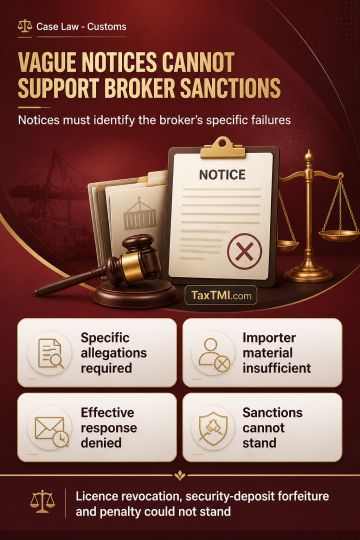
The High Court held that a customs broker who merely filed documents supplied by the importer had acted as a ministerial conduit, with no evidence of knowledge, intentional suppression, or participation in fraud. Those findings were factual and showed no perversity, so no substantial question of law arose under Section 130 of the Customs Act. The Court also held that, because the penalty against the respondent had been set aside in full, there was no quantified liability surviving against him and the Revenue could not rely on the investigation's overall value or the importer's separate liability to cross the monetary threshold for appeal. The appeal was not admitted and was dismissed.
The High Court held that a customs broker who merely filed documents supplied by the importer had acted as a ministerial conduit, with no evidence of knowledge, intentional suppression, or participation in fraud. Those findings were factual and showed no perversity, so no substantial question of law arose under Section 130 of the Customs Act. The Court also held that, because the penalty against the respondent had been set aside in full, there was no quantified liability surviving against him and the Revenue could not rely on the investigation's overall value or the importer's separate liability to cross the monetary threshold for appeal. The appeal was not admitted and was dismissed.
Note: It is a system-generated summary and is for quick reference only.
 TaxTMI
  TaxTMI
 of 4828



 Join Channel


