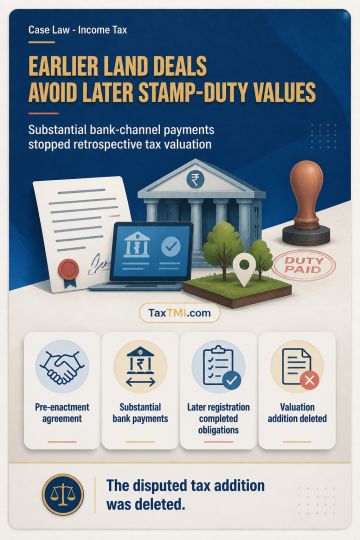
Pre-enactment land-sale agreements escape stamp-duty value substitution where substantial banking-channel consideration was received before Section 43...
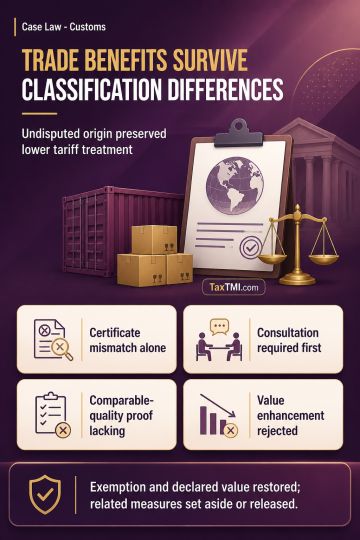
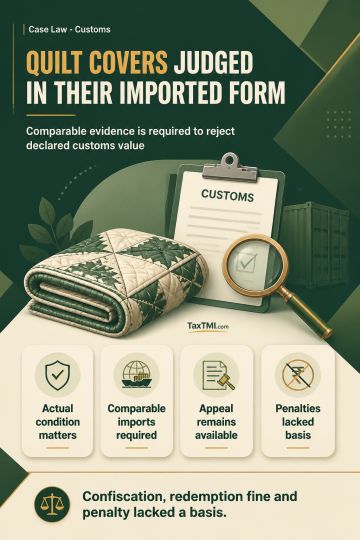
Customs valuation and classification require comparable evidence and assessment of imported goods in their actual condition, invalidating related pena...
The High Court held that a customs broker who merely filed documents supplied by the importer had acted as a ministerial conduit, with no evidence of knowledge, intentional suppression, or participation in fraud. Those findings were factual and showed no perversity, so no substantial question of law arose under Section 130 of the Customs Act. The Court also held that, because the penalty against the respondent had been set aside in full, there was no quantified liability surviving against him and the Revenue could not rely on the investigation's overall value or the importer's separate liability to cross the monetary threshold for appeal. The appeal was not admitted and was dismissed.
The High Court held that a customs broker who merely filed documents supplied by the importer had acted as a ministerial conduit, with no evidence of knowledge, intentional suppression, or participation in fraud. Those findings were factual and showed no perversity, so no substantial question of law arose under Section 130 of the Customs Act. The Court also held that, because the penalty against the respondent had been set aside in full, there was no quantified liability surviving against him and the Revenue could not rely on the investigation's overall value or the importer's separate liability to cross the monetary threshold for appeal. The appeal was not admitted and was dismissed.
Note: It is a system-generated summary and is for quick reference only.
 TaxTMI
  TaxTMI
 of 4828






 Join Channel