Clean slate principle extinguishes uncrystallised operational claims and bars continuation of pending recovery and arbitral proceedings after plan app...
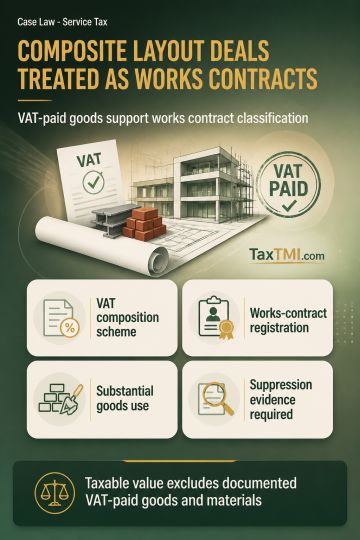
Works contract classification governs composite layout-development contracts where VAT-paid goods are transferred alongside construction and infrastru...
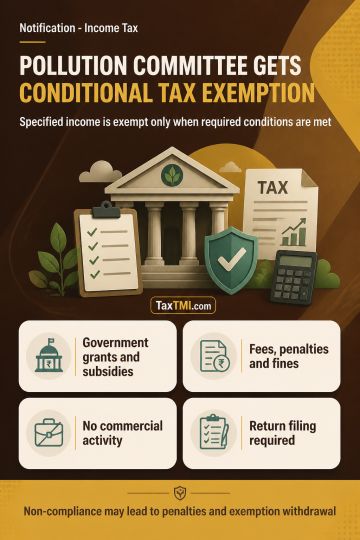
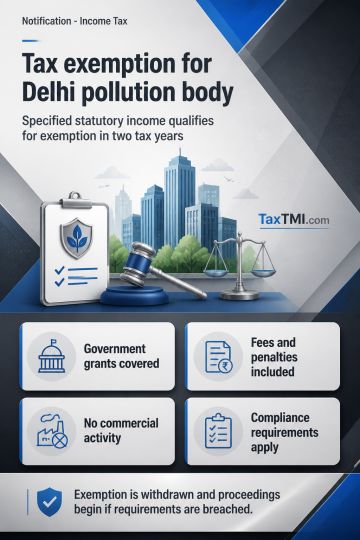
Specified income tax exemption for pollution control body remains conditional on non-commercial activity, unchanged income character, and return filin...
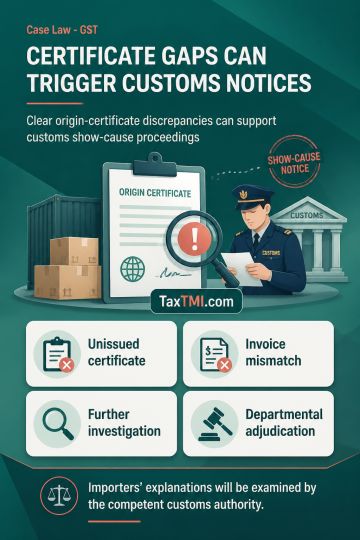
Jurisdictional facts in certificate-of-origin discrepancies can support customs show-cause proceedings, leaving factual explanations for departmental ...
Extended period of limitation under customs and IGST law is available only where suppression, wilful misstatement, collusion or fraud is established. Here, the Tribunal found that the Bill of Entry disclosed the classification, notification number, serial number and applied IGST rate, and treated the dispute as one of interpretation over the applicable IGST rate rather than concealment. It also held the matter revenue neutral because the importer could avail input tax credit of any additional IGST paid. The demand was therefore held time-barred and unsustainable, without examining the merits of the IGST rate.
Extended period of limitation under customs and IGST law is available only where suppression, wilful misstatement, collusion or fraud is established. Here, the Tribunal found that the Bill of Entry disclosed the classification, notification number, serial number and applied IGST rate, and treated the dispute as one of interpretation over the applicable IGST rate rather than concealment. It also held the matter revenue neutral because the importer could avail input tax credit of any additional IGST paid. The demand was therefore held time-barred and unsustainable, without examining the merits of the IGST rate.
Note: It is a system-generated summary and is for quick reference only.
 TaxTMI
  TaxTMI
 of 4823






 Join Channel