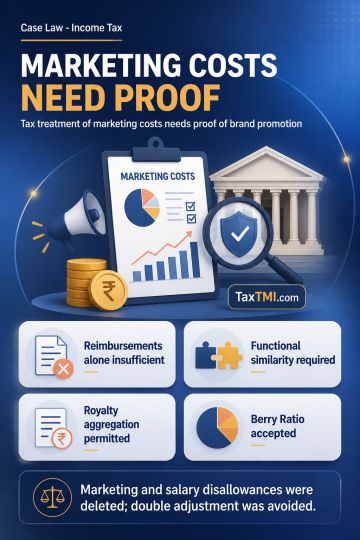
Transfer pricing requires evidence for AMP transactions, functionally reliable comparables, and appropriate aggregation or Berry Ratio benchmarking me...
Revisionary jurisdiction cannot reopen share capital assessments where adequate inquiry supports a permissible view and no independent error is establ...
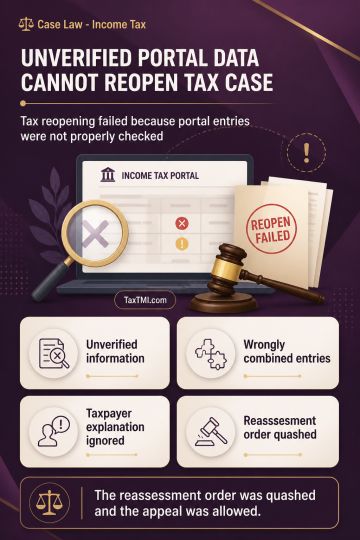
Reassessment jurisdiction fails where unverified portal information is aggregated without examining the taxpayer's explanation or relevance of entries...
Statutory sanction for delayed reassessment requires approval from the prescribed authority; approval by an inferior authority invalidates jurisdictio...
Transfer pricing margin adjustments require matching treatment of non-operating income and related costs, with comparability issues reconsidered on ev...
Preliminary-expense amortisation and MAT exempt-income adjustments prevailed, while trademark costs and managerial remuneration require fresh verifica...
Export valuation requires contemporaneous evidence; unrelated invoices cannot prove overvaluation, and dual penalties on firm and partner are impermis...
IBC's overriding effect was held to displace inconsistent contractual or prior statutory claims, and the approved resolution plan was binding on all stakeholders, including shareholders and the State. A shareholder of the corporate debtor had no independent right in project or leasehold assets, so dilution of that interest under the CIRP was a statutory insolvency consequence, not a violation of Article 300A. The Court also rejected Article 14 and plan-modification objections, holding that retention of the operator fell within commercial discretion and supported going-concern continuity. Fresh tender and FDI-based challenges were declined as matters within the insolvency framework and regulatory domain. Re-litigation was treated as abuse of process, and costs were upheld.
IBC's overriding effect was held to displace inconsistent contractual or prior statutory claims, and the approved resolution plan was binding on all stakeholders, including shareholders and the State. A shareholder of the corporate debtor had no independent right in project or leasehold assets, so dilution of that interest under the CIRP was a statutory insolvency consequence, not a violation of Article 300A. The Court also rejected Article 14 and plan-modification objections, holding that retention of the operator fell within commercial discretion and supported going-concern continuity. Fresh tender and FDI-based challenges were declined as matters within the insolvency framework and regulatory domain. Re-litigation was treated as abuse of process, and costs were upheld.
Note: It is a system-generated summary and is for quick reference only.
 TaxTMI
  TaxTMI
 of 4827















 Join Channel


