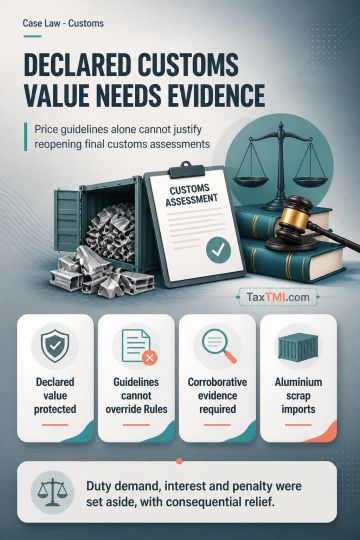
Transaction value cannot be rejected solely on non-statutory valuation guidelines without corroborative evidence supporting reassessment of final cust...
Cross-examination rights and corroborated evidence limit customs penalties for misdeclaration in genuine import transactions involving documented clea...
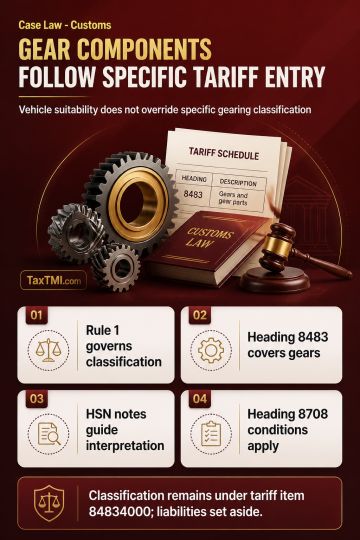
Tariff classification of vehicle gear components follows the specific gearing entry, displacing motor-vehicle parts classification and related liabili...
Necessary-party requirements limit impleadment of independent entities, while deferred consideration does not create an appealable adverse determinati...
Food supplement classification requires common parlance and authoritative tests, preventing treatment as proprietary Ayurvedic medicines without suppo...
Delay in re-filing a company appeal was not condoned because the appellant failed to show sufficient cause or due diligence in curing defects. The NCLAT held that, especially in insolvency matters, re-filing delays must be assessed strictly in light of the Code's time-bound framework, and generic explanations such as re-pagination, paper-book restructuring, rescanning, and internal record retrieval are inadequate without material particulars. Here, no defect sheet, specific Registry objections, or date-wise chronology of corrective steps was produced, and the claim that records were in Mumbai was treated as a bare logistical inconvenience. The application for condonation was rejected, and the appeal was consequently rejected.
Delay in re-filing a company appeal was not condoned because the appellant failed to show sufficient cause or due diligence in curing defects. The NCLAT held that, especially in insolvency matters, re-filing delays must be assessed strictly in light of the Code's time-bound framework, and generic explanations such as re-pagination, paper-book restructuring, rescanning, and internal record retrieval are inadequate without material particulars. Here, no defect sheet, specific Registry objections, or date-wise chronology of corrective steps was produced, and the claim that records were in Mumbai was treated as a bare logistical inconvenience. The application for condonation was rejected, and the appeal was consequently rejected.
Note: It is a system-generated summary and is for quick reference only.
 TaxTMI
  TaxTMI
 of 4823















 Join Channel




