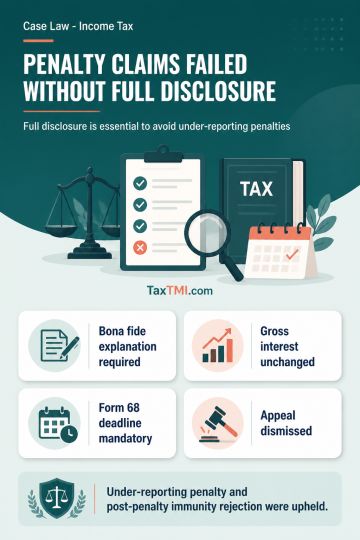
Bona fide disclosure requirements govern under-reporting penalties, and post-penalty immunity applications cannot secure available statutory protectio...
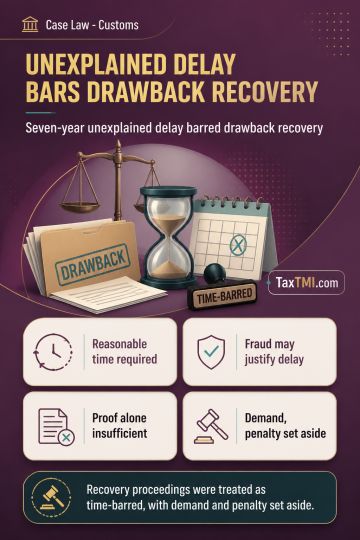
Certificate-of-origin verification procedure governs preferential customs benefits; denial without retroactive verification was set aside with consequ...
Disciplinary Committee jurisdiction and mandatory investigation requirements invalidated cancellation of an insolvency professional's registration and...
Retention of seized property survives where recorded reasons support proceeds of crime, while stayed investigation periods are excluded from limitatio...
Service of GST orders through the common portal is legally valid under Sections 169 and 146 of the CGST Act, and a belated writ challenge based on alleged non-communication cannot be entertained nearly three years later. The High Court upheld dismissal of the writ petition on delay and laches, noting that the appellant had an available statutory appellate remedy. It further held that any such remedy must be pursued in accordance with the statutory scheme, including limitation, and no separate protective order was warranted. The appellant was left free to seek the statutory remedy subject to law.
Service of GST orders through the common portal is legally valid under Sections 169 and 146 of the CGST Act, and a belated writ challenge based on alleged non-communication cannot be entertained nearly three years later. The High Court upheld dismissal of the writ petition on delay and laches, noting that the appellant had an available statutory appellate remedy. It further held that any such remedy must be pursued in accordance with the statutory scheme, including limitation, and no separate protective order was warranted. The appellant was left free to seek the statutory remedy subject to law.
Note: It is a system-generated summary and is for quick reference only.
 TaxTMI
  TaxTMI
 of 4823













 Join Channel