Windmill commissioning evidence supported higher depreciation where grid connection and electricity generation proved operational use before the relev...
Pharmaceutical promotion and transfer-pricing comparability principles limited disallowances, while uncorroborated search allegations and unsupported ...
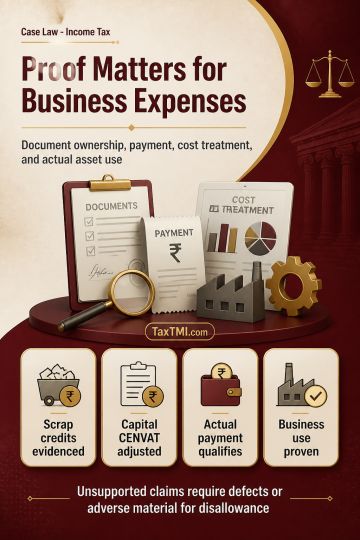
Business expenditure substantiation supports scrap credits, statutory payments and expense claims, while depreciation requires proof of actual busines...
Revision under section 263 was held unsustainable because the Assessing Officer had properly examined the relevant material, accepted the assessee's project completion method, and adopted one permissible view on the taxability of on-money from the Spring-II project. The Court reiterated that revision is available only when the assessment order is both erroneous and prejudicial to the interests of the Revenue; a mere difference of opinion cannot justify interference where enquiries were made and the view taken was plausible. No material showed that the amount was taxable in the relevant assessment year, so the appeal was dismissed and no substantial question of law arose.
Revision under section 263 was held unsustainable because the Assessing Officer had properly examined the relevant material, accepted the assessee's project completion method, and adopted one permissible view on the taxability of on-money from the Spring-II project. The Court reiterated that revision is available only when the assessment order is both erroneous and prejudicial to the interests of the Revenue; a mere difference of opinion cannot justify interference where enquiries were made and the view taken was plausible. No material showed that the amount was taxable in the relevant assessment year, so the appeal was dismissed and no substantial question of law arose.
Note: It is a system-generated summary and is for quick reference only.
 TaxTMI
  TaxTMI
 of 4821


















 Join Channel


