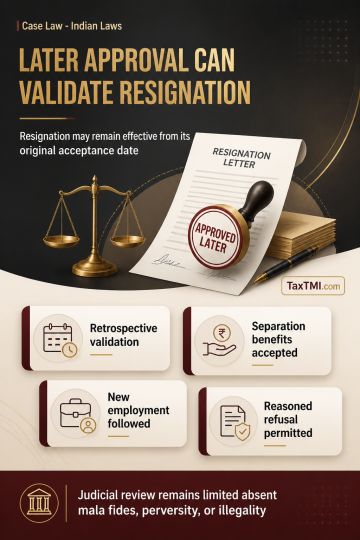
Ratification of resignation acceptance validates separation retrospectively, while withdrawal may be refused through reasoned administrative discretio...
Nature-dependent electricity contracts receive new Ind AS accounting, hedge designation, transition and financial-statement disclosure requirements fr...
Alternative GST remedy permitted protective writ intervention for ex parte adjudication, preserving independent appellate review of input tax credit d...
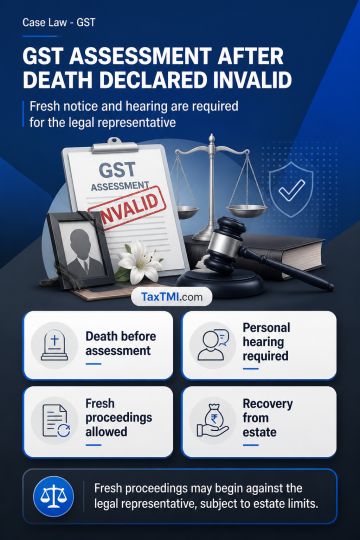
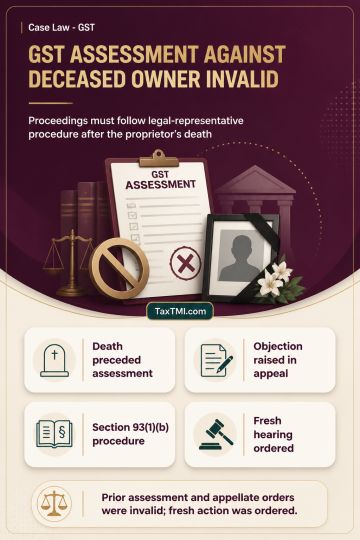
Assessment against deceased sole proprietor requires proceedings against the legal representative, rendering prior assessment and appellate orders inv...
Residential waste collection classification under SAC 999423 defeats composite-supply exemption where facilitating goods are not transferred to the lo...
Bid-rigging was proved by direct and circumstantial email evidence showing coordinated bidding, allocation of shares, tender distribution, price discussions, bid withdrawal directions and continued receipt of cartel communications without dissociation; contravention under Sections 3(1) and 3(3)(a) to (d) was therefore affirmed. Once cartel conduct was established, the presumption of appreciable adverse effect on competition applied and was not rebutted; reliance on Rajasthan Cylinder was distinguished. The partner's liability under Section 48 was upheld, and penalty based on average income at the same rate as the firm was held proper. Challenges based on vacancy in composition and denial of cross-examination failed, and both appeals were dismissed.
Bid-rigging was proved by direct and circumstantial email evidence showing coordinated bidding, allocation of shares, tender distribution, price discussions, bid withdrawal directions and continued receipt of cartel communications without dissociation; contravention under Sections 3(1) and 3(3)(a) to (d) was therefore affirmed. Once cartel conduct was established, the presumption of appreciable adverse effect on competition applied and was not rebutted; reliance on Rajasthan Cylinder was distinguished. The partner's liability under Section 48 was upheld, and penalty based on average income at the same rate as the firm was held proper. Challenges based on vacancy in composition and denial of cross-examination failed, and both appeals were dismissed.
Note: It is a system-generated summary and is for quick reference only.
 TaxTMI
  TaxTMI
 of 4828











 Join Channel