Higher depreciation for qualifying commercial vehicles, exempt-income disallowance, research deduction verification, and club-expense treatment clarif...
Charitable registration renewal cannot become an assessment of receipts, profitability or annual exemption compliance, requiring renewal and donation ...
AMP expenditure for own business is not an international transaction without an associated-enterprise arrangement, eliminating transfer pricing adjust...
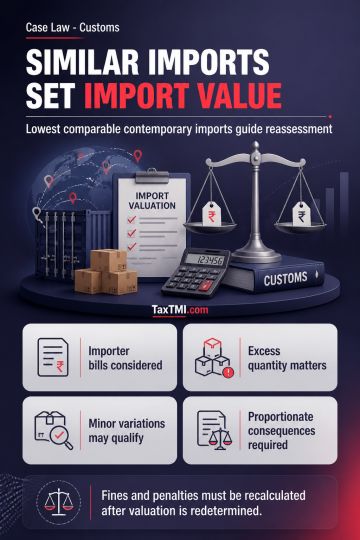
Customs valuation must use comparable contemporary imports, while confiscation fines and penalties require proportionate recalculation on reassessed v...
Depositor-protection proceedings prevail over corporate insolvency, while liquidators may recover chit receivables using copies of seized company reco...
Bid-rigging was proved by direct and circumstantial email evidence showing coordinated bidding, allocation of shares, tender distribution, price discussions, bid withdrawal directions and continued receipt of cartel communications without dissociation; contravention under Sections 3(1) and 3(3)(a) to (d) was therefore affirmed. Once cartel conduct was established, the presumption of appreciable adverse effect on competition applied and was not rebutted; reliance on Rajasthan Cylinder was distinguished. The partner's liability under Section 48 was upheld, and penalty based on average income at the same rate as the firm was held proper. Challenges based on vacancy in composition and denial of cross-examination failed, and both appeals were dismissed.
Bid-rigging was proved by direct and circumstantial email evidence showing coordinated bidding, allocation of shares, tender distribution, price discussions, bid withdrawal directions and continued receipt of cartel communications without dissociation; contravention under Sections 3(1) and 3(3)(a) to (d) was therefore affirmed. Once cartel conduct was established, the presumption of appreciable adverse effect on competition applied and was not rebutted; reliance on Rajasthan Cylinder was distinguished. The partner's liability under Section 48 was upheld, and penalty based on average income at the same rate as the firm was held proper. Challenges based on vacancy in composition and denial of cross-examination failed, and both appeals were dismissed.
Note: It is a system-generated summary and is for quick reference only.
 TaxTMI
  TaxTMI
 of 4830















 Join Channel


