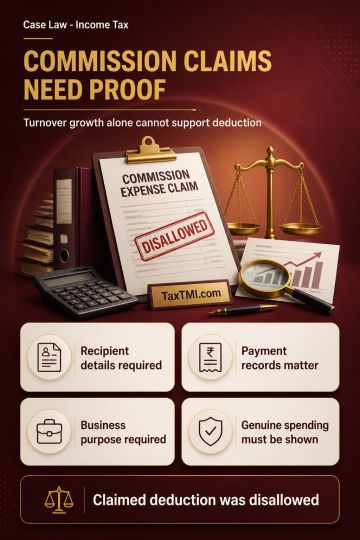
Business expenditure deduction requires proof of genuine commission payments and commercial allowability; turnover growth alone cannot validate the cl...
Article 8 treaty coverage excluded third-party airline support services, while documented demonetisation cash receipts remained accepted business inco...
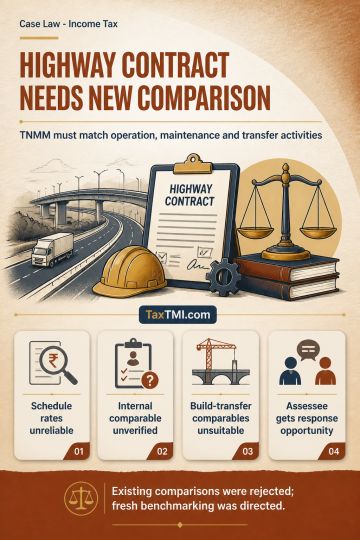
Functional comparability under TNMM requires highway contract benchmarks to reflect operation, maintenance and transfer activities, requiring fresh be...
Rule 86A permits only a temporary restriction on debit of credit actually available in the Electronic Credit Ledger; it does not authorise the Commissioner or an authorised officer to create a negative balance by blocking more credit than stands to the taxpayer's account. The High Court also reiterated that prior show cause notice is not required before invoking Rule 86A, because the measure is preventive and intended for emergent situations, but that does not enlarge the statutory power. The impugned blocking beyond the available credit was unsustainable and was set aside, while the authorities were left free to pursue recovery through the statutory mechanisms available in law.
Rule 86A permits only a temporary restriction on debit of credit actually available in the Electronic Credit Ledger; it does not authorise the Commissioner or an authorised officer to create a negative balance by blocking more credit than stands to the taxpayer's account. The High Court also reiterated that prior show cause notice is not required before invoking Rule 86A, because the measure is preventive and intended for emergent situations, but that does not enlarge the statutory power. The impugned blocking beyond the available credit was unsustainable and was set aside, while the authorities were left free to pursue recovery through the statutory mechanisms available in law.
Note: It is a system-generated summary and is for quick reference only.
 TaxTMI
  TaxTMI
 of 4821












 Join Channel


