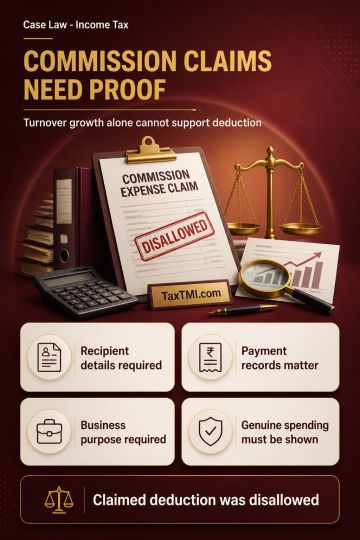
Business expenditure deduction requires proof of genuine commission payments and commercial allowability; turnover growth alone cannot validate the cl...
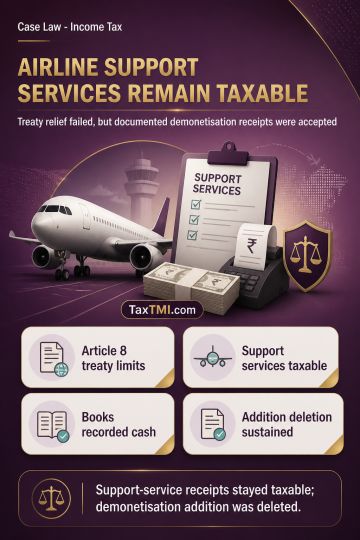
Article 8 treaty coverage excluded third-party airline support services, while documented demonetisation cash receipts remained accepted business inco...
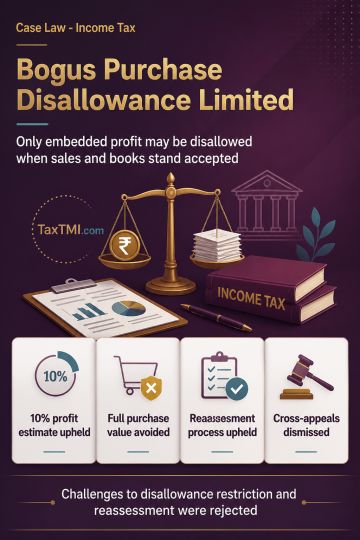
Bogus purchase additions under section 69C were discussed in the context of whether the assessee had discharged the burden of proving genuineness; the note states that purchase invoices, supplier ledgers, transport receipts, banking records and regular books supported the transactions, and that a mere reversal of input tax credit did not by itself establish non-genuine purchases. It also addresses reassessment under section 148, stating that notice and the section 148A(d) order were not in accordance with law where the reopening was based on DGGI/Insight information, the material was not supplied to the assessee, and no independent application of mind was shown. The addition and reopening are described as unsustainable on those facts.
Bogus purchase additions under section 69C were discussed in the context of whether the assessee had discharged the burden of proving genuineness; the note states that purchase invoices, supplier ledgers, transport receipts, banking records and regular books supported the transactions, and that a mere reversal of input tax credit did not by itself establish non-genuine purchases. It also addresses reassessment under section 148, stating that notice and the section 148A(d) order were not in accordance with law where the reopening was based on DGGI/Insight information, the material was not supplied to the assessee, and no independent application of mind was shown. The addition and reopening are described as unsustainable on those facts.
Note: It is a system-generated summary and is for quick reference only.
 TaxTMI
  TaxTMI
 of 4828





 Join Channel