Business expenditure deduction requires proof of genuine commission payments and commercial allowability; turnover growth alone cannot validate the cl...
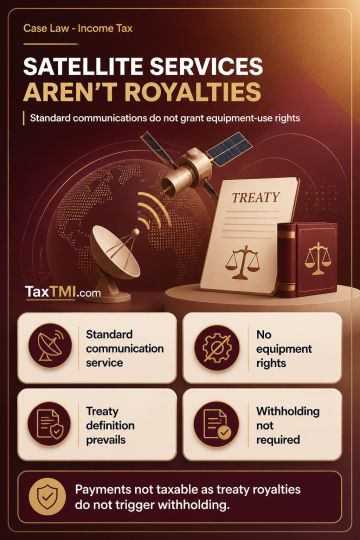
Article 8 treaty coverage excluded third-party airline support services, while documented demonetisation cash receipts remained accepted business inco...
Functional comparability under TNMM requires highway contract benchmarks to reflect operation, maintenance and transfer activities, requiring fresh be...
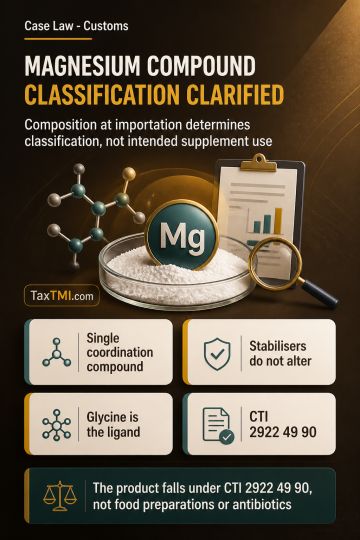
Objective characteristics govern magnesium bis-glycinate chelate classification as an amino-acid coordination compound, not a food preparation or anti...
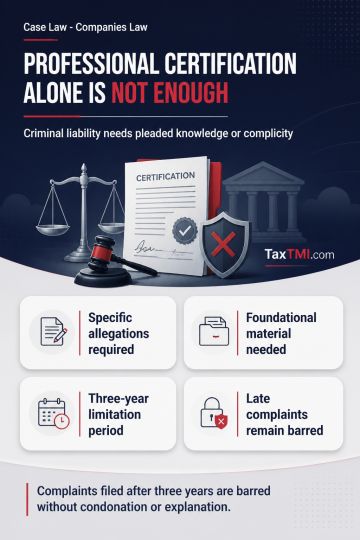
Independent professional certification requires pleaded knowledge or complicity for criminal liability; untimely complaints remain barred by limitatio...
Page of 4819
Press 'Enter' after typing page number.
901 to 920 of 96365 Results
❮
❯
❯❯
0 / 200
Expand Note
Add to Folder
No Folders have been created
+
Are you sure you want to delete "My most important" ?
Section 3(2) of the Foreign Trade (Development and Regulation) Act, 1992 empowers the Central Government to prohibit, restrict or otherwise regulate imports by Gazette order, and section 5 permits amendment of foreign trade policy. On that basis, a notification fixing a Minimum Import Price for roasted areca nut was within statutory competence. The notification was also treated as consistent with the ASEAN and WTO framework because it operated as a non-tariff safeguard for agricultural products, fixed only a trigger price, and did not impose a quantitative import cap. Importers could not avoid the MIP condition by relying on nil-duty eligibility under Notification No. 46/2011.
Section 3(2) of the Foreign Trade (Development and Regulation) Act, 1992 empowers the Central Government to prohibit, restrict or otherwise regulate imports by Gazette order, and section 5 permits amendment of foreign trade policy. On that basis, a notification fixing a Minimum Import Price for roasted areca nut was within statutory competence. The notification was also treated as consistent with the ASEAN and WTO framework because it operated as a non-tariff safeguard for agricultural products, fixed only a trigger price, and did not impose a quantitative import cap. Importers could not avoid the MIP condition by relying on nil-duty eligibility under Notification No. 46/2011.
Note: It is a system-generated summary and is for quick reference only.
 TaxTMI
  TaxTMI
 of 4819














 Join Channel


