Origin Declaration authentication governs preferential tariff claims under India-UK CETA, requiring a validated reference number before import clearan...
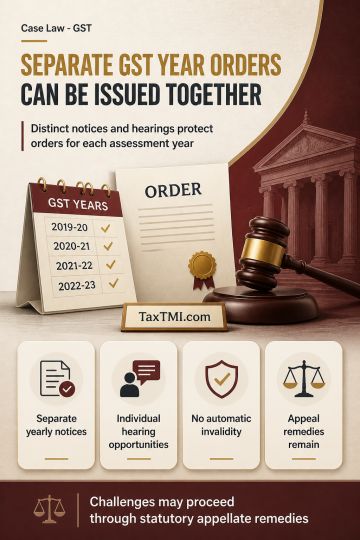
Separate assessment orders for different years remain valid when distinct notices and hearing opportunities prevent prejudice from combined proceeding...
Defined public benefit can retain charitable character; registration renewal requires examining genuine activities and legal compliance, not surplus a...
Capital reduction is distinct from share buy-back, preventing buy-back tax; restructuring interest and related business deductions also survive scruti...
CESTAT reiterated that the extended period of limitation could not be invoked where the department already knew of the exports and MEIS benefit claims from an earlier show cause notice on the same products and period; suppression and wilful misstatement were therefore not made out. It also held that customs could not deny or recover MEIS benefits while the scrips remained uncancelled, since DGFT had not completed cancellation proceedings. On both limitation and merits, the impugned demand and recovery action were unsustainable, and the appeal was allowed with consequential relief.
CESTAT reiterated that the extended period of limitation could not be invoked where the department already knew of the exports and MEIS benefit claims from an earlier show cause notice on the same products and period; suppression and wilful misstatement were therefore not made out. It also held that customs could not deny or recover MEIS benefits while the scrips remained uncancelled, since DGFT had not completed cancellation proceedings. On both limitation and merits, the impugned demand and recovery action were unsustainable, and the appeal was allowed with consequential relief.
Note: It is a system-generated summary and is for quick reference only.
 TaxTMI
 of 4803



















 Join Channel


 TaxTMI
