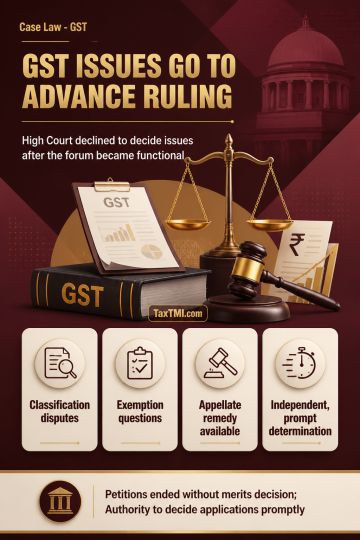
Advance-ruling mechanism governs pending GST classification, exemption and taxability disputes, limiting writ review once the specialised forum functi...
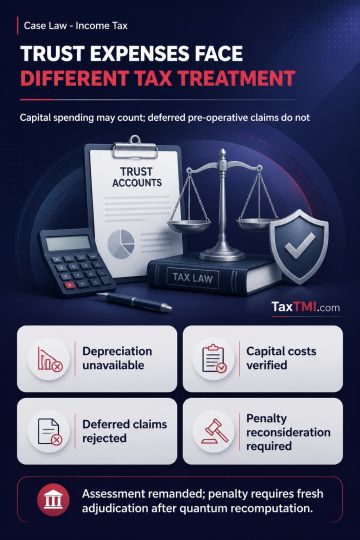
Charitable trust income application permits verified capital expenditure but rejects deferred pre-operative claims and requires reconsideration of con...
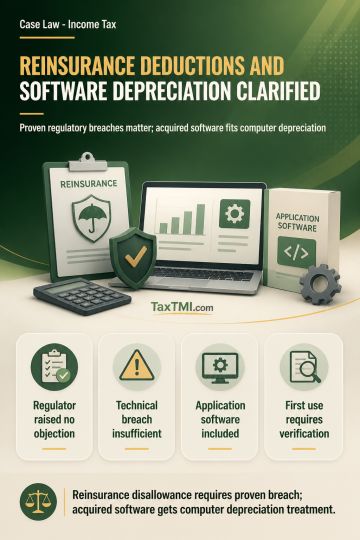
Reinsurance premium deductions require established regulatory breaches, while independently acquired software qualifies within the computer depreciati...
A revised return validly filed on discovery of bona fide omissions under section 139(5) supplants the original return for all assessment purposes, so the original computation cannot be treated as surviving separately for depreciation. The Court held that the revised return here was not a mere change in depreciation mode but also corrected omitted claims, and there was no mala fide intent. It further held that Rule 5(1A) is directory, but the option to switch from SLM to WDV cannot extend the statutory due date under section 139(1). Since the revised return replaced the original and the depreciation option was otherwise within the year concerned, the assessee was allowed to adopt WDV and the revenue's challenge failed.
A revised return validly filed on discovery of bona fide omissions under section 139(5) supplants the original return for all assessment purposes, so the original computation cannot be treated as surviving separately for depreciation. The Court held that the revised return here was not a mere change in depreciation mode but also corrected omitted claims, and there was no mala fide intent. It further held that Rule 5(1A) is directory, but the option to switch from SLM to WDV cannot extend the statutory due date under section 139(1). Since the revised return replaced the original and the depreciation option was otherwise within the year concerned, the assessee was allowed to adopt WDV and the revenue's challenge failed.
Note: It is a system-generated summary and is for quick reference only.
 TaxTMI
  TaxTMI
 of 4823







 Join Channel


