Country of Origin Certificates and declared transaction value supported preferential customs exemption where authenticity and invoice prices remained ...
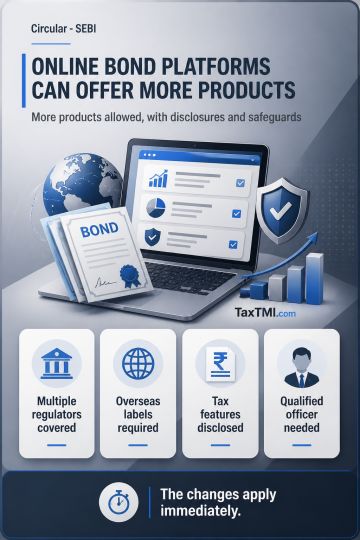
Online bond platforms may offer overseas-regulated products and tax-specific bonds subject to disclosures, compliance safeguards and revised complianc...
Corporate guarantee valuation permits actual ascertainable commission while barring retroactive application and extended-period penalties for bona fid...
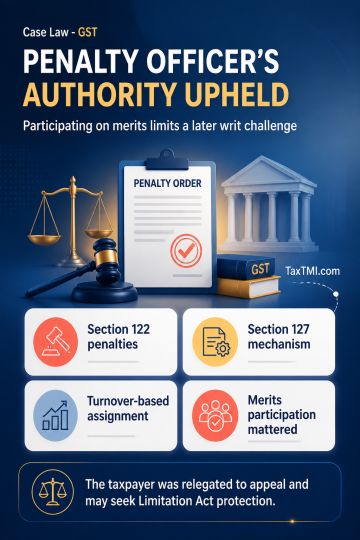
Proper-officer jurisdiction under UPGST penalty provisions upheld; participation on merits prevents bypassing the statutory appellate remedy through w...
Transitioned CENVAT credit may validly satisfy mandatory pre-deposit requirements for legacy service tax appeals through Electronic Credit Ledger debi...
Page of 4830
Press 'Enter' after typing page number.
701 to 720 of 96587 Results
❮
❯
❯❯
0 / 200
Expand Note
Add to Folder
No Folders have been created
+
Are you sure you want to delete "My most important" ?
A revised return validly filed on discovery of bona fide omissions under section 139(5) supplants the original return for all assessment purposes, so the original computation cannot be treated as surviving separately for depreciation. The Court held that the revised return here was not a mere change in depreciation mode but also corrected omitted claims, and there was no mala fide intent. It further held that Rule 5(1A) is directory, but the option to switch from SLM to WDV cannot extend the statutory due date under section 139(1). Since the revised return replaced the original and the depreciation option was otherwise within the year concerned, the assessee was allowed to adopt WDV and the revenue's challenge failed.
A revised return validly filed on discovery of bona fide omissions under section 139(5) supplants the original return for all assessment purposes, so the original computation cannot be treated as surviving separately for depreciation. The Court held that the revised return here was not a mere change in depreciation mode but also corrected omitted claims, and there was no mala fide intent. It further held that Rule 5(1A) is directory, but the option to switch from SLM to WDV cannot extend the statutory due date under section 139(1). Since the revised return replaced the original and the depreciation option was otherwise within the year concerned, the assessee was allowed to adopt WDV and the revenue's challenge failed.
Note: It is a system-generated summary and is for quick reference only.
 TaxTMI
  TaxTMI
 of 4830











 Join Channel