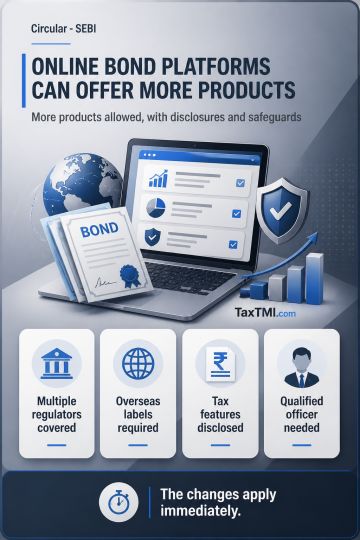
Online bond platforms may offer overseas-regulated products and tax-specific bonds subject to disclosures, compliance safeguards and revised complianc...
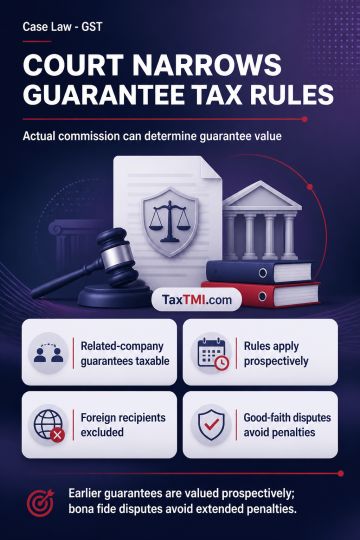
Corporate guarantee valuation permits actual ascertainable commission while barring retroactive application and extended-period penalties for bona fid...
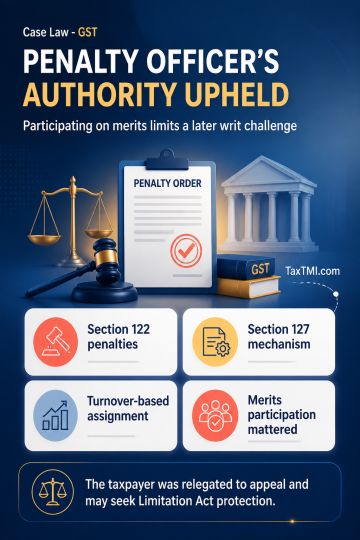
Proper-officer jurisdiction under UPGST penalty provisions upheld; participation on merits prevents bypassing the statutory appellate remedy through w...
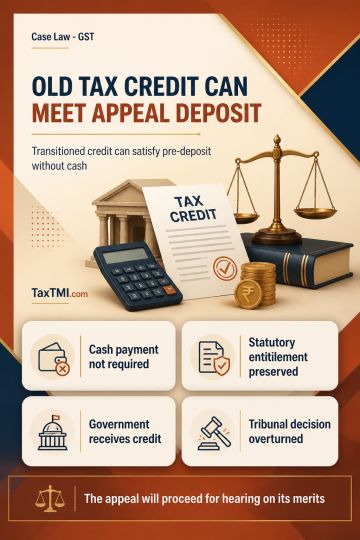
Transitioned CENVAT credit may validly satisfy mandatory pre-deposit requirements for legacy service tax appeals through Electronic Credit Ledger debi...
Building-plan sanction charges require statutory authority; unauthorised fees and GST were quashed, while labour cess must follow prescribed collectio...
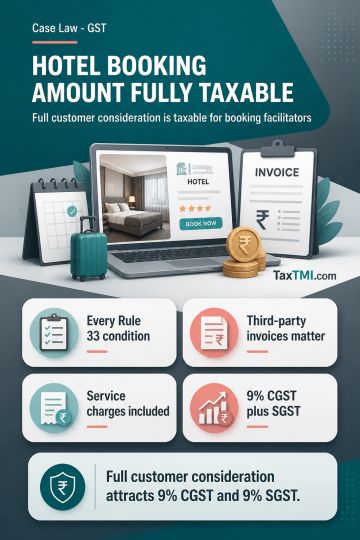
Pure-agent exclusion fails where hotel booking facilitators receive third-party services themselves, making entire customer consideration taxable as r...
Bogus long-term capital gains from penny stock transactions were rejected where contract notes, demat entries, bank records and sale documents did not establish genuineness. The Tribunal found that the scrip showed abnormal price movement unrelated to the company's financial position and business activity, the original purchase was through an off-market route in an unlisted company, and the assessee was not shown to be a regular or informed investor. Applying the human probabilities test, it treated the transaction as a pre-arranged accommodation entry mechanism to convert unaccounted income into exempt capital gains. The burden under section 68 was not discharged, the addition was upheld, and exemption under section 10(38) was denied.
Bogus long-term capital gains from penny stock transactions were rejected where contract notes, demat entries, bank records and sale documents did not establish genuineness. The Tribunal found that the scrip showed abnormal price movement unrelated to the company's financial position and business activity, the original purchase was through an off-market route in an unlisted company, and the assessee was not shown to be a regular or informed investor. Applying the human probabilities test, it treated the transaction as a pre-arranged accommodation entry mechanism to convert unaccounted income into exempt capital gains. The burden under section 68 was not discharged, the addition was upheld, and exemption under section 10(38) was denied.
Note: It is a system-generated summary and is for quick reference only.
 TaxTMI
  TaxTMI
 of 4828







 Join Channel


