Charitable registration turns on predominant purpose and genuine activities, while incidental fees and related-party rent require supporting adverse m...
MAT book-profit adjustments exclude disallowances for exempt-income expenditure and demerger expenditure unless expressly listed under the statutory c...
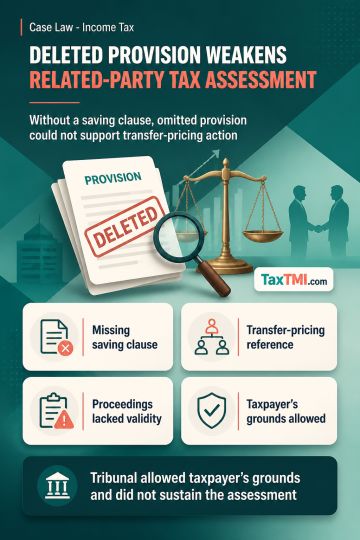
Omitted specified domestic transaction provision invalidates related-party expenditure transfer-pricing references and assessments based on consequent...
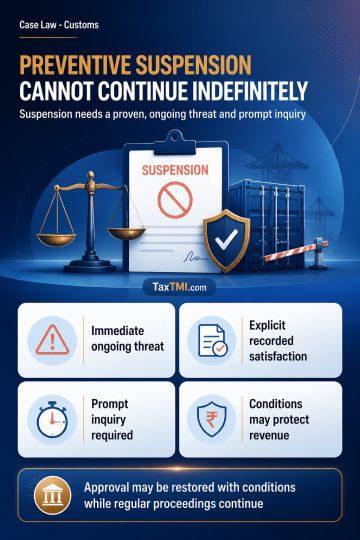
Preventive suspension requires an immediate continuing threat and cannot become indefinite without inquiry, fresh evidence, or proportionate safeguard...
Segmental financials for transfer pricing cannot be rejected at...
Transfer pricing benchmarking and receivables adjustments remanded: segmental financials need proper scrutiny, and foreign-currency interest must track LIBOR.
Contents
Summary
Note
Bookmark
Share
✓ Copied successfully !
Print
Print Options
For full text, please login
Login to TaxTMI
Verification Pending
The Email Id has not been verified. Click on the link we have sent on
Segmental financials for transfer pricing cannot be rejected at the threshold merely because they are not audited or show variance between AE and non-AE margins; the proper course is to test allocation keys, verify expense apportionment, and then independently decide acceptance for arm's length price determination. The Tribunal therefore restored the segmental benchmarking issue for fresh examination. On working capital adjustment, the TPO had to apply transfer pricing principles to the assessee's claim and could not reject it on broad grounds; if allowed, the receivables adjustment would fall away. If interest remains leviable on overdue foreign-currency invoices, it must be benchmarked with LIBOR-based rates, not SBI PLR. The matter was remanded for fresh determination.
Segmental financials for transfer pricing cannot be rejected at the threshold merely because they are not audited or show variance between AE and non-AE margins; the proper course is to test allocation keys, verify expense apportionment, and then independently decide acceptance for arm's length price determination. The Tribunal therefore restored the segmental benchmarking issue for fresh examination. On working capital adjustment, the TPO had to apply transfer pricing principles to the assessee's claim and could not reject it on broad grounds; if allowed, the receivables adjustment would fall away. If interest remains leviable on overdue foreign-currency invoices, it must be benchmarked with LIBOR-based rates, not SBI PLR. The matter was remanded for fresh determination.
Note: It is a system-generated summary and is for quick reference only.
 TaxTMI
  TaxTMI
 of 4828




















 Join Channel


