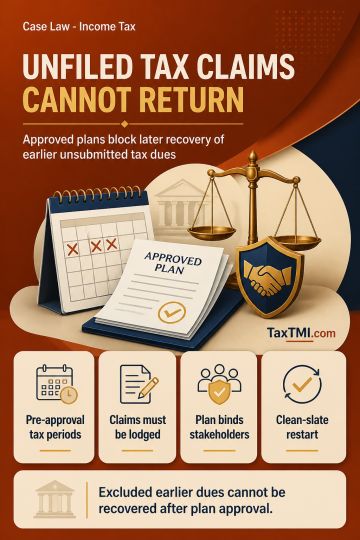
Approved resolution plans extinguish unsubmitted pre-approval tax claims, preventing later recovery outside the insolvency process and preserving a cl...
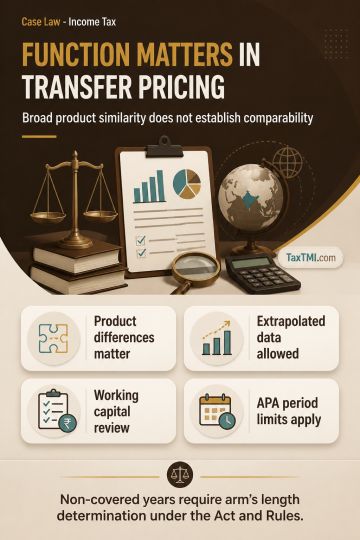
Transfer pricing comparability requires functional alignment and permits working capital adjustment, while APA margins cannot govern non-covered years...
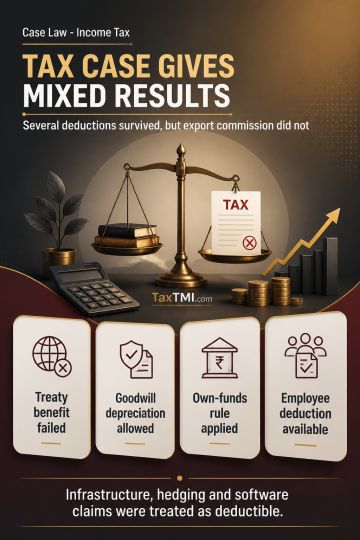
Treaty benefit, goodwill depreciation and hedging costs: export commission disallowed, while key business deductions and depreciation claims succeeded...
Recall of ex parte orders requires a showing of sufficient cause for non-appearance, whereas review is confined to an error apparent on the face of the record. The Tribunal found no sufficient cause where repeated opportunities had been granted, including a final opportunity after the applicant was already proceeded ex parte, yet the applicant remained absent. Illness and death in one partner's family and lapse of previous counsel were held insufficient, especially when other partners of the firm also gave no explanation. The request to place additional material on record, including a later Supreme Court decision, was not considered because recall itself failed. The recall applications were dismissed.
Recall of ex parte orders requires a showing of sufficient cause for non-appearance, whereas review is confined to an error apparent on the face of the record. The Tribunal found no sufficient cause where repeated opportunities had been granted, including a final opportunity after the applicant was already proceeded ex parte, yet the applicant remained absent. Illness and death in one partner's family and lapse of previous counsel were held insufficient, especially when other partners of the firm also gave no explanation. The request to place additional material on record, including a later Supreme Court decision, was not considered because recall itself failed. The recall applications were dismissed.
Note: It is a system-generated summary and is for quick reference only.
 TaxTMI
  TaxTMI
 of 4817



 Join Channel