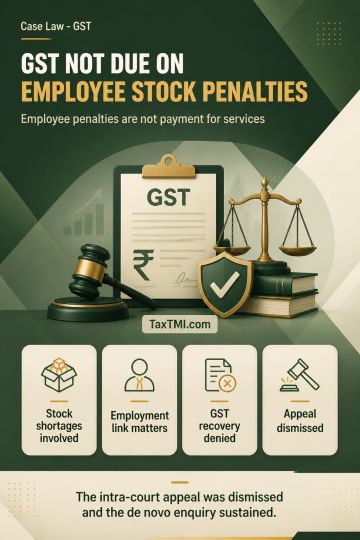
Employee stock-shortage penalties do not constitute consideration for services, preventing GST collection under Schedule II in employment relationship...
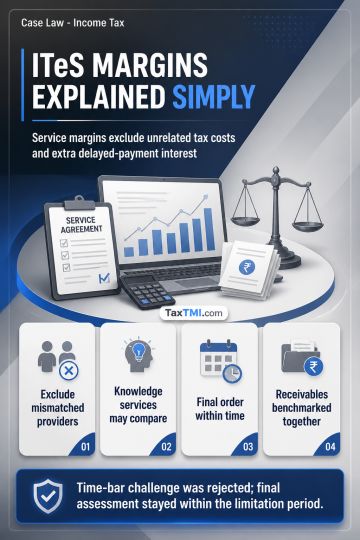
Transfer-pricing treatment of ITeS margins excludes pass-through tax recoveries and separate delayed-receivables interest after working-capital adjust...
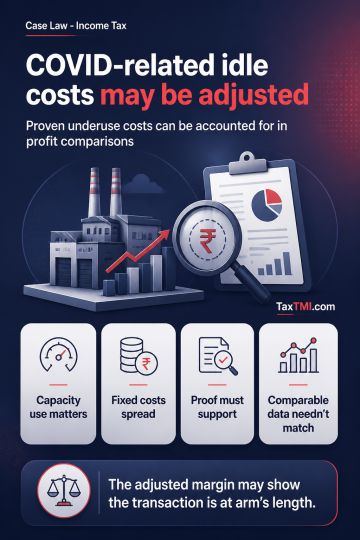
Capacity-utilisation adjustments under TNMM can neutralise substantiated COVID-related idle costs where underutilisation materially affects profitabil...
Page of 4830
Press 'Enter' after typing page number.
181 to 200 of 96587 Results
❮
❯
❯❯
0 / 200
Expand Note
Add to Folder
No Folders have been created
+
Are you sure you want to delete "My most important" ?
Refund of duty on export goods was held barred by the doctrine of unjust enrichment where the exporter realised export proceeds above the FOB value declared in the shipping bill. The Tribunal applied the statutory bar and required proof that the duty incidence had not been passed on. As no cogent financial correlation or satisfactory explanation was produced to show that the excess realisation excluded the refund component, and the chartered accountant's certificate did not address this point, a presumption arose that the burden had been passed on. The refund sanction was therefore unsustainable and rejection of the claim was upheld.
Refund of duty on export goods was held barred by the doctrine of unjust enrichment where the exporter realised export proceeds above the FOB value declared in the shipping bill. The Tribunal applied the statutory bar and required proof that the duty incidence had not been passed on. As no cogent financial correlation or satisfactory explanation was produced to show that the excess realisation excluded the refund component, and the chartered accountant's certificate did not address this point, a presumption arose that the burden had been passed on. The refund sanction was therefore unsustainable and rejection of the claim was upheld.
Note: It is a system-generated summary and is for quick reference only.
 TaxTMI
  TaxTMI
 of 4830







 Join Channel


