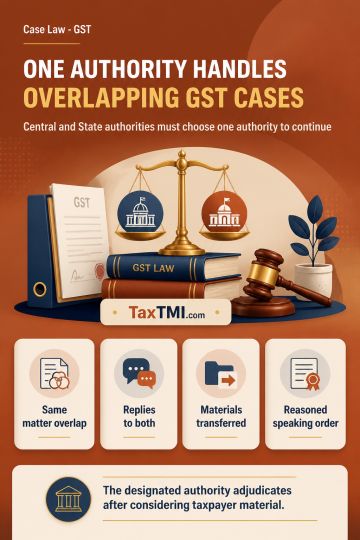
Overlapping GST proceedings require Central and State authorities to designate one competent authority for coordinated adjudication of the same matter...
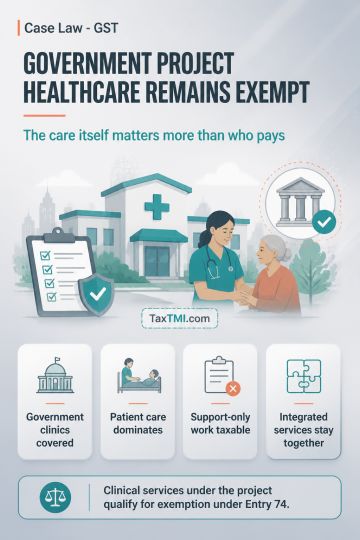
Composite healthcare supplies retain exemption when patient care is the contract's essential character, despite payment through an implementing agency...
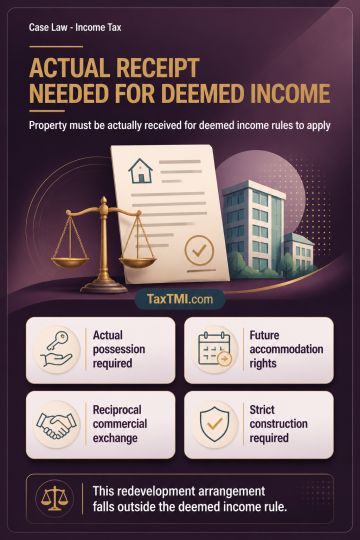
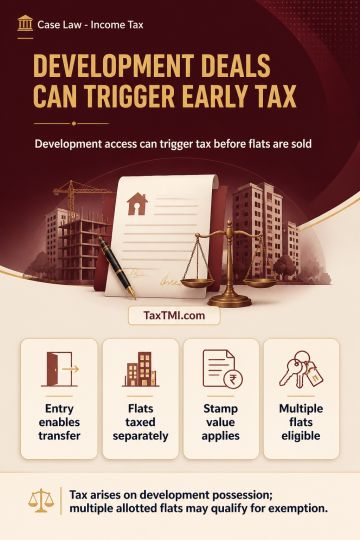
Receipt of immovable property requires actual possession or enjoyment; redevelopment allotments exchanged for tenancy rights fall outside deemed incom...
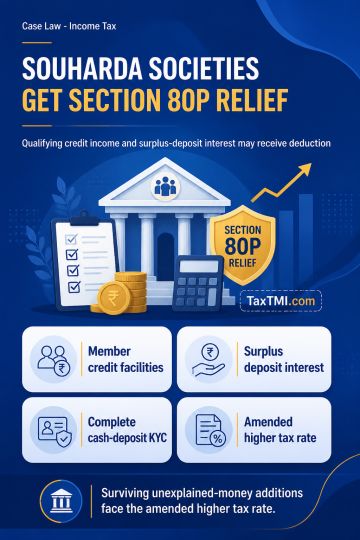
Section 80P deduction covers Souharda credit societies, including qualifying surplus-deposit interest, subject to member KYC verification for cash dep...
Sections 92 to 92F operate as a self-contained code for arm's length price determination, so RBI or Government approvals for royalty rates do not create any presumption for income-tax purposes. The Court accepted that the assessee's comparability analysis was inadequate and that arm's length pricing required a detailed functional and economic examination, not a bare comparison of royalty percentages. The Tribunal's fixation of royalty at 1% of export sales was treated as a factual finding, with no perversity shown, and the disallowance of excess royalty was upheld. The assessee's acceptance of 1% in later assessment years was only an additional circumstance, not the principal basis of decision, and no substantial question of law arose under Section 260A.
Sections 92 to 92F operate as a self-contained code for arm's length price determination, so RBI or Government approvals for royalty rates do not create any presumption for income-tax purposes. The Court accepted that the assessee's comparability analysis was inadequate and that arm's length pricing required a detailed functional and economic examination, not a bare comparison of royalty percentages. The Tribunal's fixation of royalty at 1% of export sales was treated as a factual finding, with no perversity shown, and the disallowance of excess royalty was upheld. The assessee's acceptance of 1% in later assessment years was only an additional circumstance, not the principal basis of decision, and no substantial question of law arose under Section 260A.
Note: It is a system-generated summary and is for quick reference only.
 TaxTMI
  TaxTMI
 of 4821





 Join Channel


