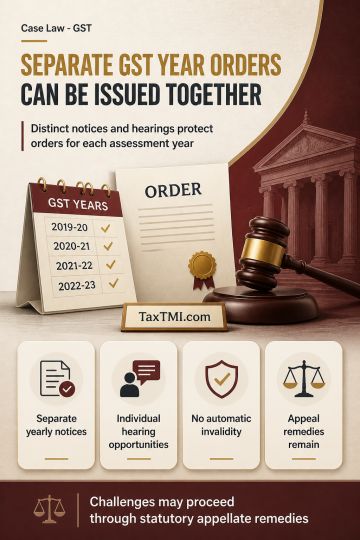
Separate assessment orders for different years remain valid when distinct notices and hearing opportunities prevent prejudice from combined proceeding...
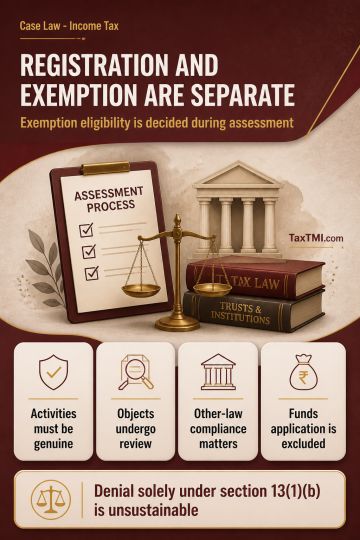
Defined public benefit can retain charitable character; registration renewal requires examining genuine activities and legal compliance, not surplus a...
Capital reduction is distinct from share buy-back, preventing buy-back tax; restructuring interest and related business deductions also survive scruti...
Transfer pricing and tax deductions upheld on established principles, while employee contributions and warranty provisions returned for fresh examinat...
Section 249(4)(b) could not be used to reject the quantum appeal where the record did not show taxable income in India and, on the assessee's consistent case, no obligation to pay advance tax arose. The Tribunal noted that the addition stemmed only from an unexplained source of investment in immovable property, not from returned or admitted income. The Commissioner (Appeals) therefore erred in dismissing the appeal in limine. The quantum matter was restored to the jurisdictional Assessing Officer for de novo adjudication after due opportunity, and the consequential penalty under section 271(1)(c) was also restored for fresh consideration.
Section 249(4)(b) could not be used to reject the quantum appeal where the record did not show taxable income in India and, on the assessee's consistent case, no obligation to pay advance tax arose. The Tribunal noted that the addition stemmed only from an unexplained source of investment in immovable property, not from returned or admitted income. The Commissioner (Appeals) therefore erred in dismissing the appeal in limine. The quantum matter was restored to the jurisdictional Assessing Officer for de novo adjudication after due opportunity, and the consequential penalty under section 271(1)(c) was also restored for fresh consideration.
Note: It is a system-generated summary and is for quick reference only.
 TaxTMI
  TaxTMI
 of 4819


















 Join Channel


