Opportunity to respond to jurisdictional reports is mandatory before customs settlement duty enhancement; connected applications require consistent ad...
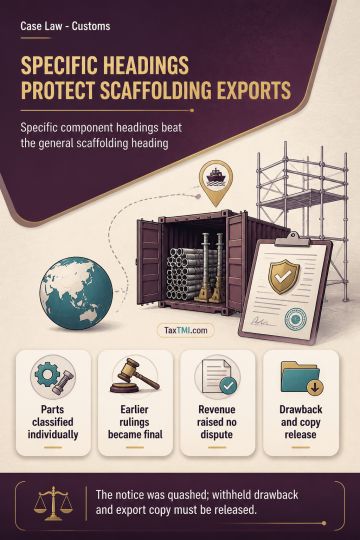
Specific customs headings for scaffolding components prevail over general classification, invalidating misclassification proceedings and enabling with...
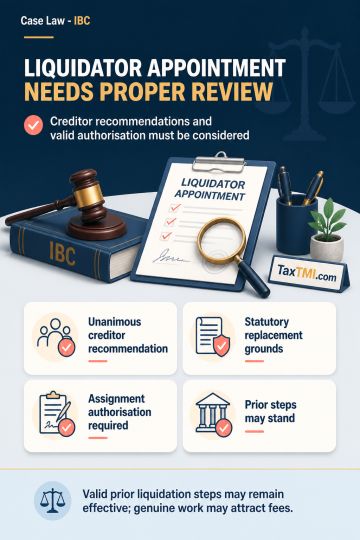
Liquidator appointment under Section 34 requires consideration of creditor recommendations, valid professional authorisation, and preservation of vali...
Statutory tax dues arising during CIRP are not extinguished by the clean slate theory on approval of a resolution plan, because the Supreme Court decisions on clean slate concerned pre-CIRP liabilities and did not govern post-commencement dues; the Court also held that extending immunity to such dues would be inconsistent with the IBC scheme and fiscal statutes. Section 238 of the IBC was not read to override State GST liabilities arising during CIRP, and Section 60(5) could not be used to confer on the NCLT jurisdiction to test the merits of tax assessments or other public law disputes under GST or income tax laws. The impugned orders were set aside and remanded for fresh consideration.
Statutory tax dues arising during CIRP are not extinguished by the clean slate theory on approval of a resolution plan, because the Supreme Court decisions on clean slate concerned pre-CIRP liabilities and did not govern post-commencement dues; the Court also held that extending immunity to such dues would be inconsistent with the IBC scheme and fiscal statutes. Section 238 of the IBC was not read to override State GST liabilities arising during CIRP, and Section 60(5) could not be used to confer on the NCLT jurisdiction to test the merits of tax assessments or other public law disputes under GST or income tax laws. The impugned orders were set aside and remanded for fresh consideration.
Note: It is a system-generated summary and is for quick reference only.
 TaxTMI
 of 4788











 Join Channel


 TaxTMI
