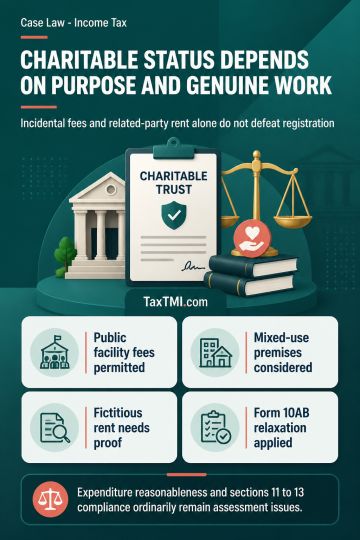
Charitable registration turns on predominant purpose and genuine activities, while incidental fees and related-party rent require supporting adverse m...
MAT book-profit adjustments exclude disallowances for exempt-income expenditure and demerger expenditure unless expressly listed under the statutory c...
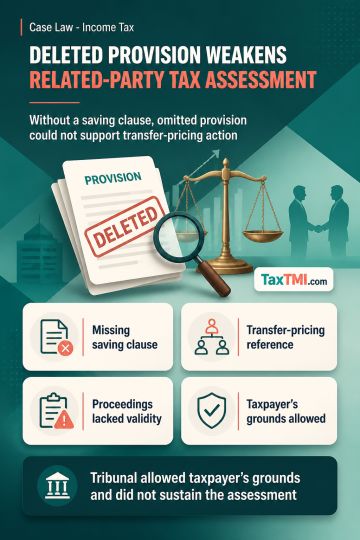
Omitted specified domestic transaction provision invalidates related-party expenditure transfer-pricing references and assessments based on consequent...
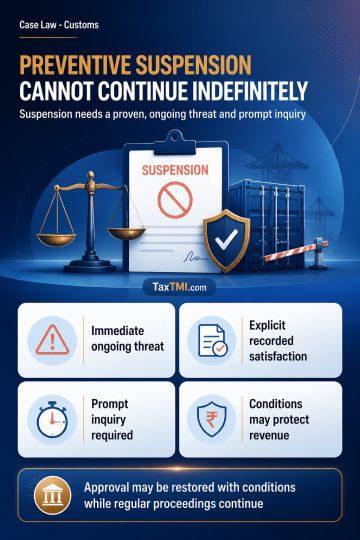
Preventive suspension requires an immediate continuing threat and cannot become indefinite without inquiry, fresh evidence, or proportionate safeguard...
Page of 4800
Press 'Enter' after typing page number.
261 to 280 of 96000 Results
❮
❯
❯❯
0 / 200
Expand Note
Add to Folder
No Folders have been created
+
Are you sure you want to delete "My most important" ?
The Delhi HC reiterated that derecognition of income relating to consumers' share of efficiency gains and the deduction under section 80-IA were already covered against the Department by its earlier decision in Tata Power Delhi Distribution Ltd., leaving no surviving question. It further upheld deletion of disallowance under section 43B for uncollected energy tax, accepting that the tax became payable only when collected from consumers. The Court also treated interest on consumer security deposits as an accrued statutory and contractual liability, not a contingent one, and held that UPS forms an integral part of a computer system, so depreciation at the computer rate was proper. The appeal was dismissed.
The Delhi HC reiterated that derecognition of income relating to consumers' share of efficiency gains and the deduction under section 80-IA were already covered against the Department by its earlier decision in Tata Power Delhi Distribution Ltd., leaving no surviving question. It further upheld deletion of disallowance under section 43B for uncollected energy tax, accepting that the tax became payable only when collected from consumers. The Court also treated interest on consumer security deposits as an accrued statutory and contractual liability, not a contingent one, and held that UPS forms an integral part of a computer system, so depreciation at the computer rate was proper. The appeal was dismissed.
Note: It is a system-generated summary and is for quick reference only.
 TaxTMI
 of 4800








 Join Channel


 TaxTMI