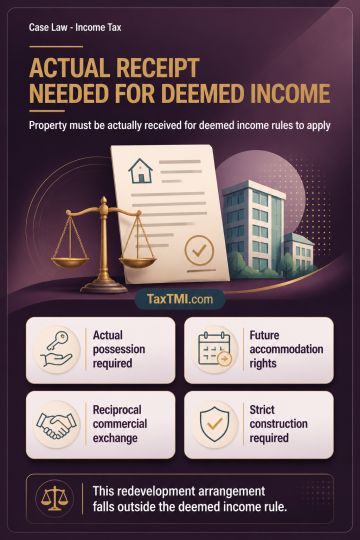
Receipt of immovable property requires actual possession or enjoyment; redevelopment allotments exchanged for tenancy rights fall outside deemed incom...
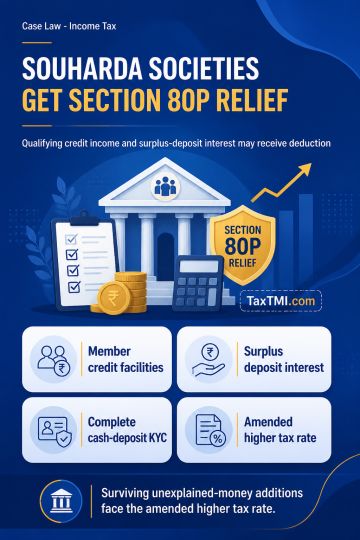
Section 80P deduction covers Souharda credit societies, including qualifying surplus-deposit interest, subject to member KYC verification for cash dep...
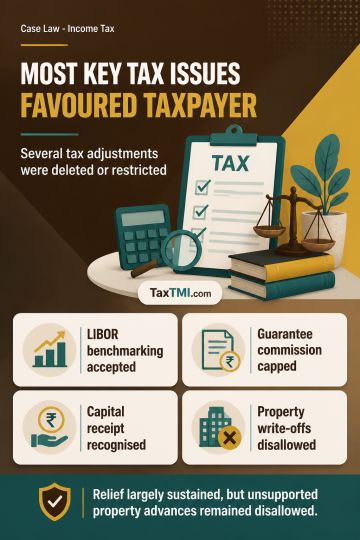
Transfer-pricing benchmarking and capital-receipt principles sustained taxpayer relief, while unsupported property-advance write-offs remained disallo...
Penalty under section 271D was unsustainable because the Tribunal found that the impugned receipts were made through banking channels by cheque on the dates shown, and the lower authorities had proceeded on an incorrect assumption about the transaction year; once cheque receipts were established, no contravention of section 269SS survived. Penalty under section 271(1)(c) was also not leviable because the loss claim was based on audited accounts and related business expenditure, and mere acceptance of disallowance did not amount to furnishing inaccurate particulars. Applying Reliance Petro Products, the Tribunal deleted both penalties.
Penalty under section 271D was unsustainable because the Tribunal found that the impugned receipts were made through banking channels by cheque on the dates shown, and the lower authorities had proceeded on an incorrect assumption about the transaction year; once cheque receipts were established, no contravention of section 269SS survived. Penalty under section 271(1)(c) was also not leviable because the loss claim was based on audited accounts and related business expenditure, and mere acceptance of disallowance did not amount to furnishing inaccurate particulars. Applying Reliance Petro Products, the Tribunal deleted both penalties.
Note: It is a system-generated summary and is for quick reference only.
 TaxTMI
 of 4805











 Join Channel


 TaxTMI
