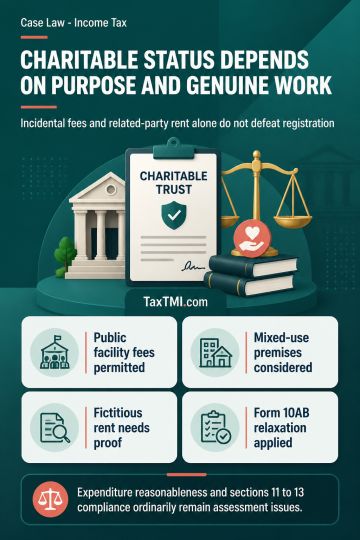
Charitable registration turns on predominant purpose and genuine activities, while incidental fees and related-party rent require supporting adverse m...
MAT book-profit adjustments exclude disallowances for exempt-income expenditure and demerger expenditure unless expressly listed under the statutory c...
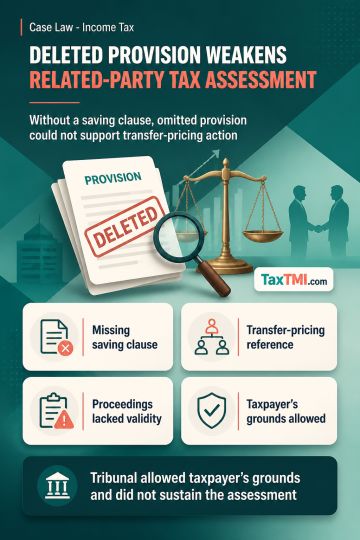
Omitted specified domestic transaction provision invalidates related-party expenditure transfer-pricing references and assessments based on consequent...
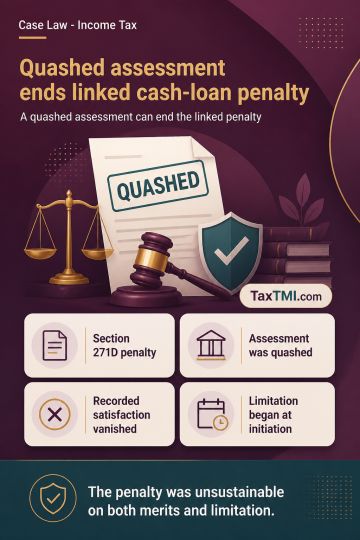
Penalty under section 271D was unsustainable because the Tribunal found that the impugned receipts were made through banking channels by cheque on the dates shown, and the lower authorities had proceeded on an incorrect assumption about the transaction year; once cheque receipts were established, no contravention of section 269SS survived. Penalty under section 271(1)(c) was also not leviable because the loss claim was based on audited accounts and related business expenditure, and mere acceptance of disallowance did not amount to furnishing inaccurate particulars. Applying Reliance Petro Products, the Tribunal deleted both penalties.
Penalty under section 271D was unsustainable because the Tribunal found that the impugned receipts were made through banking channels by cheque on the dates shown, and the lower authorities had proceeded on an incorrect assumption about the transaction year; once cheque receipts were established, no contravention of section 269SS survived. Penalty under section 271(1)(c) was also not leviable because the loss claim was based on audited accounts and related business expenditure, and mere acceptance of disallowance did not amount to furnishing inaccurate particulars. Applying Reliance Petro Products, the Tribunal deleted both penalties.
Note: It is a system-generated summary and is for quick reference only.
 TaxTMI
 of 4801







 Join Channel


 TaxTMI