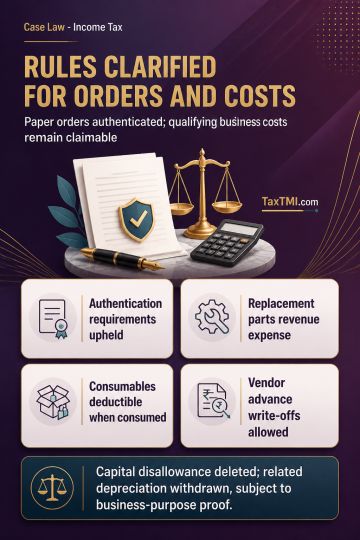
Authentication of paper assessment orders upheld, while qualifying repairs, consumables and vendor advance write-offs remain deductible business claim...
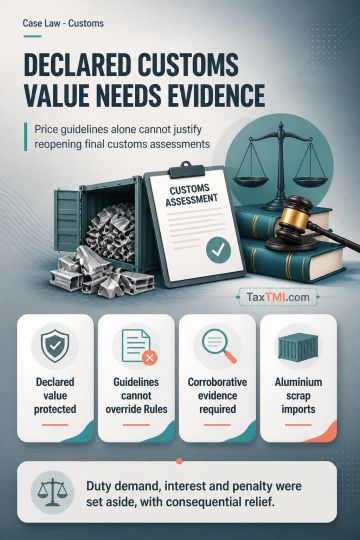
Transaction value cannot be rejected solely on non-statutory valuation guidelines without corroborative evidence supporting reassessment of final cust...
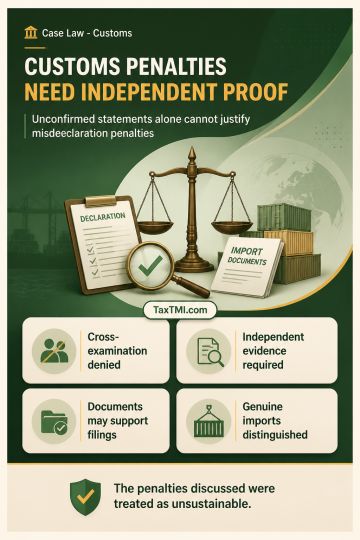
Cross-examination rights and corroborated evidence limit customs penalties for misdeclaration in genuine import transactions involving documented clea...
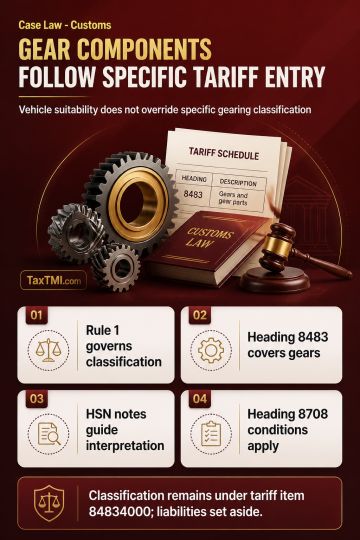
Tariff classification of vehicle gear components follows the specific gearing entry, displacing motor-vehicle parts classification and related liabili...
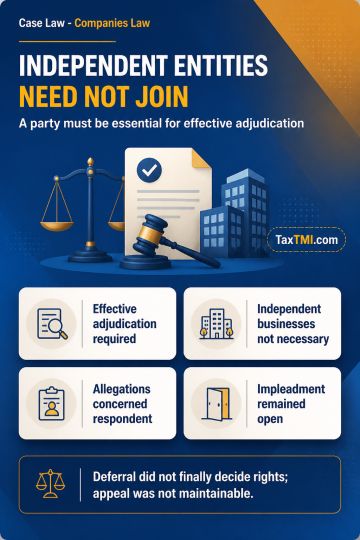
Necessary-party requirements limit impleadment of independent entities, while deferred consideration does not create an appealable adverse determinati...
Differential CVD on imported mobile phones could not be recovered on the basis of alleged post-import alteration of retail sale price. The Tribunal found no sufficient evidence that the importer itself misdeclared or later manipulated the RSP, and rejected the attempt to treat the importer and distributor as one entity because the distributor was a separate legal person and there was no basis to pierce the corporate veil. It also held that customs law contained no machinery to redetermine RSP for reassessment of additional duty, and that any post-import relabelling would, at most, raise deemed manufacture consequences under central excise law. The demand, confiscation and penalties were therefore set aside.
Differential CVD on imported mobile phones could not be recovered on the basis of alleged post-import alteration of retail sale price. The Tribunal found no sufficient evidence that the importer itself misdeclared or later manipulated the RSP, and rejected the attempt to treat the importer and distributor as one entity because the distributor was a separate legal person and there was no basis to pierce the corporate veil. It also held that customs law contained no machinery to redetermine RSP for reassessment of additional duty, and that any post-import relabelling would, at most, raise deemed manufacture consequences under central excise law. The demand, confiscation and penalties were therefore set aside.
Note: It is a system-generated summary and is for quick reference only.
 TaxTMI
 of 4803












 Join Channel


 TaxTMI
