Development agreements require legal possession or effective enjoyment for capital gains transfer; permissive possession and deferred consideration de...
Prolonged sterilisation of development rights supports capital-gains treatment, while business-income disallowances cannot govern capital-gains comput...
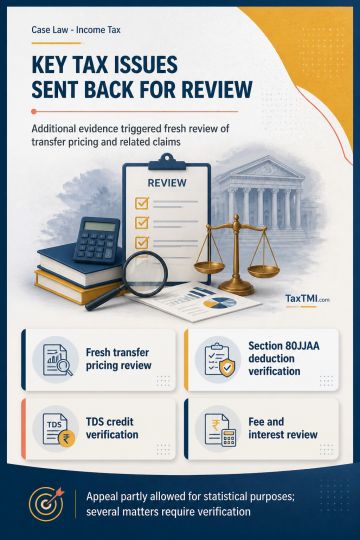
Additional evidence in transfer pricing dispute leads to fresh examination, while tax deductions, TDS credit, fee and refund interest require verifica...
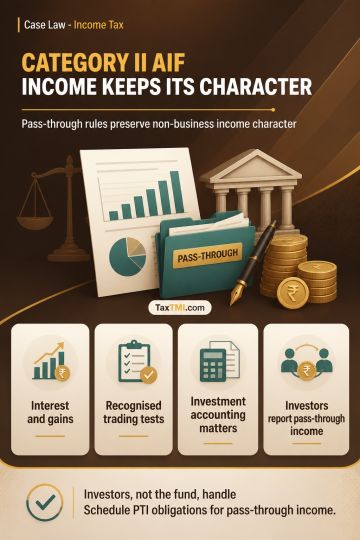
Category II AIF pass-through taxation preserves non-business income character; investment receipts cannot be reclassified without applying recognised ...
CRCL Kandla test reports were treated as adequate to classify imported synthetic fabric, because the declared entry required 85% or more textured polyester filaments while the reports showed only 60% to 63.5%; the declared Bill of Entry classification was therefore rejected and classification under CTH 54078290 upheld. On valuation, the Tribunal held that reassessment after rejection of declared value must follow the Customs Valuation Rules using relied-upon comparable import data, with invoices and supporting documents disclosed to the importer before fresh determination; the issue was remanded for that purpose. On duty exemption, ambiguity in the Letter of Permission required clarification from the Development Commissioner on whether fresh fabrics were authorised, and duty liability was to be reconsidered only within the scope of the show cause notice; this issue was also remanded.
CRCL Kandla test reports were treated as adequate to classify imported synthetic fabric, because the declared entry required 85% or more textured polyester filaments while the reports showed only 60% to 63.5%; the declared Bill of Entry classification was therefore rejected and classification under CTH 54078290 upheld. On valuation, the Tribunal held that reassessment after rejection of declared value must follow the Customs Valuation Rules using relied-upon comparable import data, with invoices and supporting documents disclosed to the importer before fresh determination; the issue was remanded for that purpose. On duty exemption, ambiguity in the Letter of Permission required clarification from the Development Commissioner on whether fresh fabrics were authorised, and duty liability was to be reconsidered only within the scope of the show cause notice; this issue was also remanded.
Note: It is a system-generated summary and is for quick reference only.
 TaxTMI
 of 4805










 Join Channel


 TaxTMI
