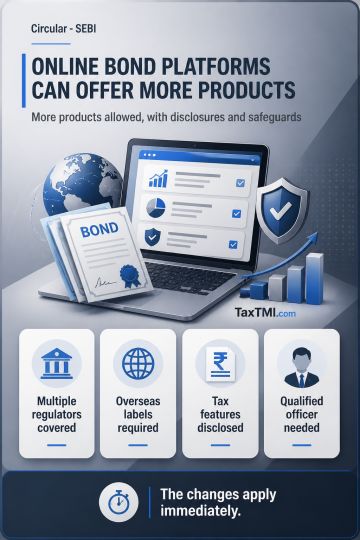
Online bond platforms may offer overseas-regulated products and tax-specific bonds subject to disclosures, compliance safeguards and revised complianc...
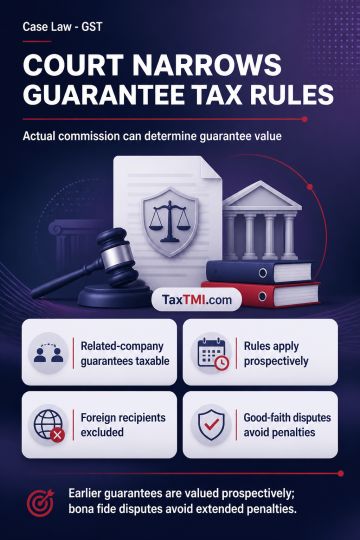
Corporate guarantee valuation permits actual ascertainable commission while barring retroactive application and extended-period penalties for bona fid...
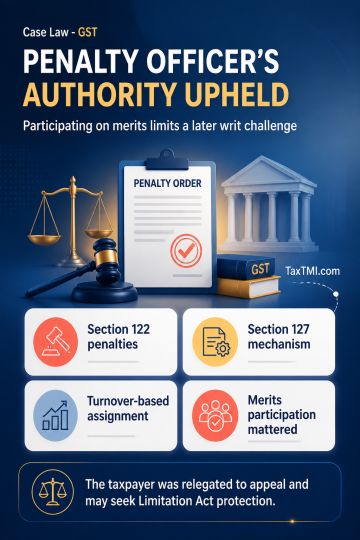
Proper-officer jurisdiction under UPGST penalty provisions upheld; participation on merits prevents bypassing the statutory appellate remedy through w...
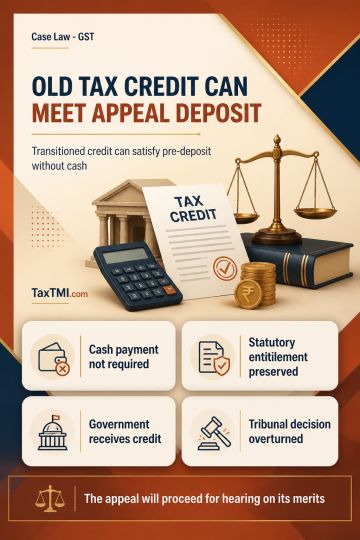
Transitioned CENVAT credit may validly satisfy mandatory pre-deposit requirements for legacy service tax appeals through Electronic Credit Ledger debi...
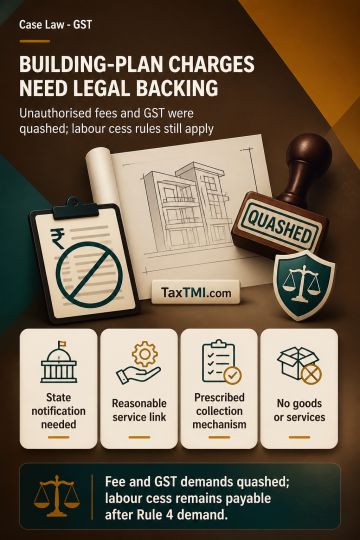
Building-plan sanction charges require statutory authority; unauthorised fees and GST were quashed, while labour cess must follow prescribed collectio...
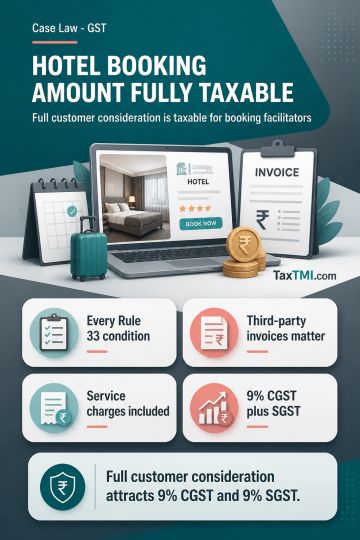
Pure-agent exclusion fails where hotel booking facilitators receive third-party services themselves, making entire customer consideration taxable as r...
CRCL Kandla test reports were treated as adequate to classify imported synthetic fabric, because the declared entry required 85% or more textured polyester filaments while the reports showed only 60% to 63.5%; the declared Bill of Entry classification was therefore rejected and classification under CTH 54078290 upheld. On valuation, the Tribunal held that reassessment after rejection of declared value must follow the Customs Valuation Rules using relied-upon comparable import data, with invoices and supporting documents disclosed to the importer before fresh determination; the issue was remanded for that purpose. On duty exemption, ambiguity in the Letter of Permission required clarification from the Development Commissioner on whether fresh fabrics were authorised, and duty liability was to be reconsidered only within the scope of the show cause notice; this issue was also remanded.
CRCL Kandla test reports were treated as adequate to classify imported synthetic fabric, because the declared entry required 85% or more textured polyester filaments while the reports showed only 60% to 63.5%; the declared Bill of Entry classification was therefore rejected and classification under CTH 54078290 upheld. On valuation, the Tribunal held that reassessment after rejection of declared value must follow the Customs Valuation Rules using relied-upon comparable import data, with invoices and supporting documents disclosed to the importer before fresh determination; the issue was remanded for that purpose. On duty exemption, ambiguity in the Letter of Permission required clarification from the Development Commissioner on whether fresh fabrics were authorised, and duty liability was to be reconsidered only within the scope of the show cause notice; this issue was also remanded.
Note: It is a system-generated summary and is for quick reference only.
 TaxTMI
 of 4798





 Join Channel


 TaxTMI
