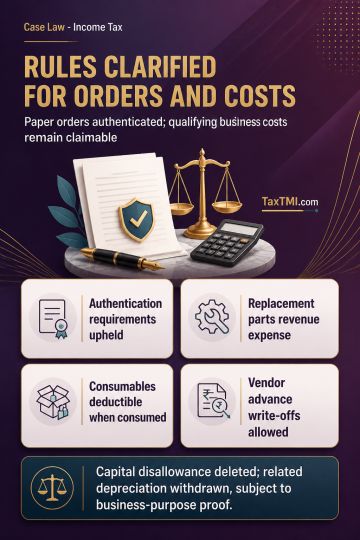
Authentication of paper assessment orders upheld, while qualifying repairs, consumables and vendor advance write-offs remain deductible business claim...
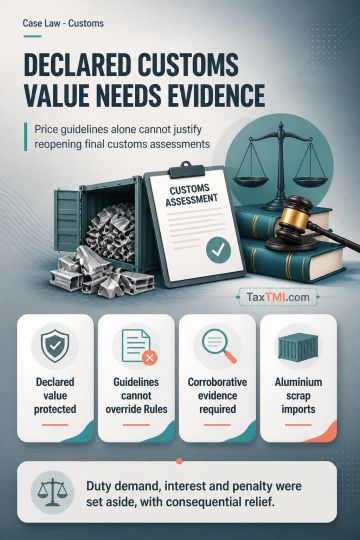
Transaction value cannot be rejected solely on non-statutory valuation guidelines without corroborative evidence supporting reassessment of final cust...
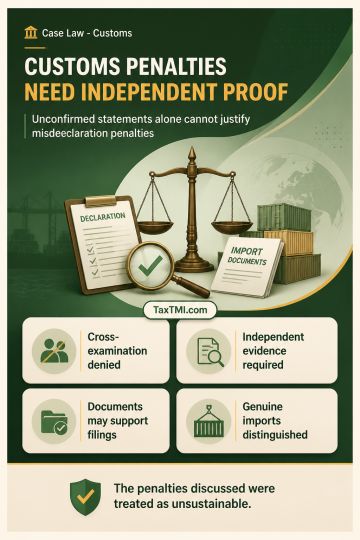
Cross-examination rights and corroborated evidence limit customs penalties for misdeclaration in genuine import transactions involving documented clea...
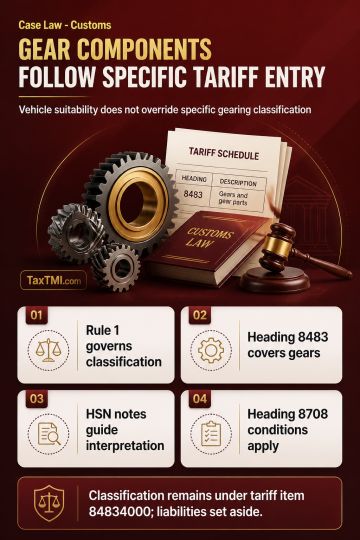
Tariff classification of vehicle gear components follows the specific gearing entry, displacing motor-vehicle parts classification and related liabili...
CRCL Kandla test reports were treated as adequate to classify imported synthetic fabric, because the declared entry required 85% or more textured polyester filaments while the reports showed only 60% to 63.5%; the declared Bill of Entry classification was therefore rejected and classification under CTH 54078290 upheld. On valuation, the Tribunal held that reassessment after rejection of declared value must follow the Customs Valuation Rules using relied-upon comparable import data, with invoices and supporting documents disclosed to the importer before fresh determination; the issue was remanded for that purpose. On duty exemption, ambiguity in the Letter of Permission required clarification from the Development Commissioner on whether fresh fabrics were authorised, and duty liability was to be reconsidered only within the scope of the show cause notice; this issue was also remanded.
CRCL Kandla test reports were treated as adequate to classify imported synthetic fabric, because the declared entry required 85% or more textured polyester filaments while the reports showed only 60% to 63.5%; the declared Bill of Entry classification was therefore rejected and classification under CTH 54078290 upheld. On valuation, the Tribunal held that reassessment after rejection of declared value must follow the Customs Valuation Rules using relied-upon comparable import data, with invoices and supporting documents disclosed to the importer before fresh determination; the issue was remanded for that purpose. On duty exemption, ambiguity in the Letter of Permission required clarification from the Development Commissioner on whether fresh fabrics were authorised, and duty liability was to be reconsidered only within the scope of the show cause notice; this issue was also remanded.
Note: It is a system-generated summary and is for quick reference only.
 TaxTMI
 of 4805









 Join Channel


 TaxTMI