Working-capital adjustment determines whether software-services transfer-pricing margins fall within the statutory tolerance range, eliminating any ad...
Permanent establishment deductions upheld for expatriate salaries, direct costs and trading losses, while head-office costs require fresh classificati...
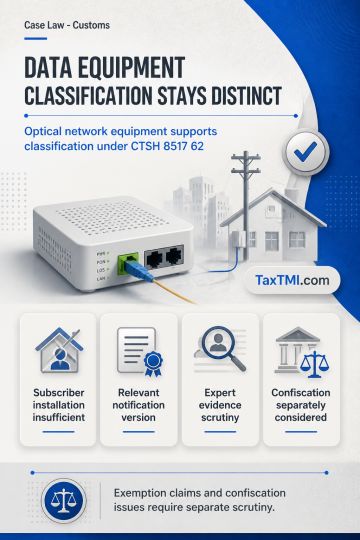
Data transmission equipment classification under CTSH 8517 62 remains distinct from residual classification, with exemption evidence requiring scrutin...
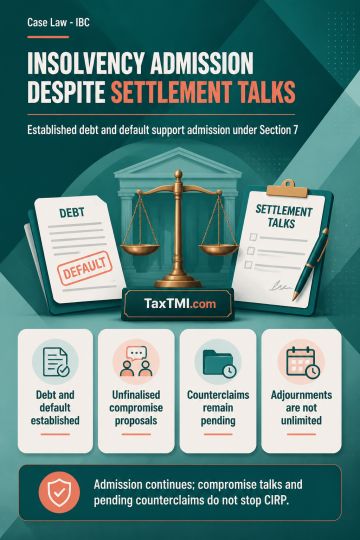
The insolvency admission was upheld because the corporate debtor could not reopen the validity of bank guarantee invocation after the DRT had already found that the guarantees were invoked before expiry and that finding had attained finality. The tribunal also treated the later one time settlement as a formal acknowledgment of the outstanding debt, and the debtor's failure to comply with that settlement constituted default. In view of the admitted sanction of the credit facility, execution of the corporate guarantee and mortgage, and remittance by the bank on invocation, the challenge to admission was untenable and the insolvency application remained valid.
The insolvency admission was upheld because the corporate debtor could not reopen the validity of bank guarantee invocation after the DRT had already found that the guarantees were invoked before expiry and that finding had attained finality. The tribunal also treated the later one time settlement as a formal acknowledgment of the outstanding debt, and the debtor's failure to comply with that settlement constituted default. In view of the admitted sanction of the credit facility, execution of the corporate guarantee and mortgage, and remittance by the bank on invocation, the challenge to admission was untenable and the insolvency application remained valid.
Note: It is a system-generated summary and is for quick reference only.
 TaxTMI
 of 4805





 Join Channel


 TaxTMI