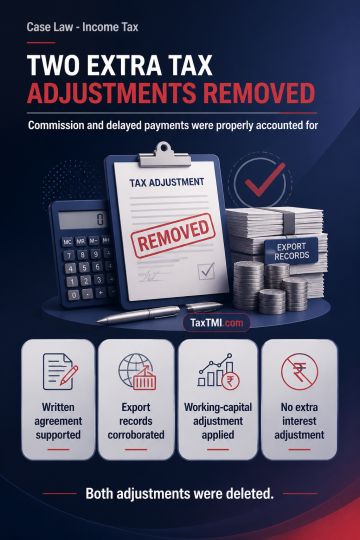
Pure reimbursement without income element escapes tax withholding, while delayed withholding and unsupported provisions face deferred or renewed scrut...
Public benefit requirement defeats charitable registration where residents' association services are reciprocal, member-only facilities governed by mu...
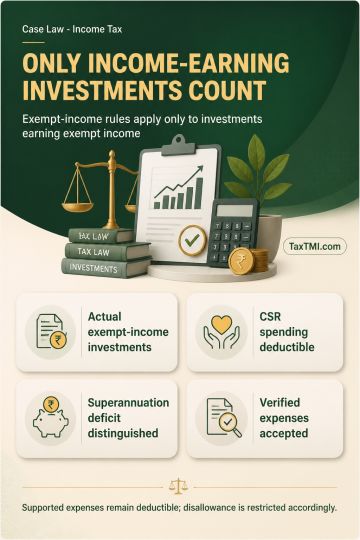
Exempt-income expenditure disallowance is confined to investments that actually generated exempt income, while supported business expenses remain dedu...
Objective characteristics and principal use govern mining-tyre classification, while fresh advance ruling applications may rely on additional technica...
Wilful disobedience is the core test for civil contempt under Article 215 and Sections 11 and 12 of the Contempt of Courts Act. The High Court held that the earlier writ order only required the employer to recalculate the withheld amount and pay it with statutory interest, not to pay a fixed sum. Because the authority undertook that exercise, determined entitlement, and made payment, substantial compliance was shown and no wilful disobedience was made out. Any challenge to the correctness or adequacy of the quantified amount lay before the appropriate forum, not in contempt.
Wilful disobedience is the core test for civil contempt under Article 215 and Sections 11 and 12 of the Contempt of Courts Act. The High Court held that the earlier writ order only required the employer to recalculate the withheld amount and pay it with statutory interest, not to pay a fixed sum. Because the authority undertook that exercise, determined entitlement, and made payment, substantial compliance was shown and no wilful disobedience was made out. Any challenge to the correctness or adequacy of the quantified amount lay before the appropriate forum, not in contempt.
Note: It is a system-generated summary and is for quick reference only.
 TaxTMI
  TaxTMI
 of 4821






 Join Channel


