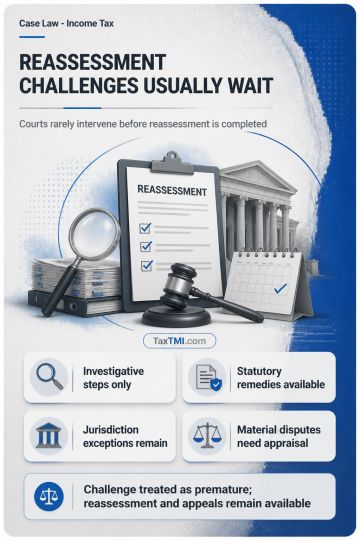
Preliminary reassessment proceedings generally require statutory remedies unless jurisdiction is wholly absent or mandatory conditions are patently br...
Agricultural land classification requires cumulative factual indicators, while industrial-purpose land and absent agricultural use defeat reinvestment...
Wilful disobedience is the core test for civil contempt under Article 215 and Sections 11 and 12 of the Contempt of Courts Act. The High Court held that the earlier writ order only required the employer to recalculate the withheld amount and pay it with statutory interest, not to pay a fixed sum. Because the authority undertook that exercise, determined entitlement, and made payment, substantial compliance was shown and no wilful disobedience was made out. Any challenge to the correctness or adequacy of the quantified amount lay before the appropriate forum, not in contempt.
Wilful disobedience is the core test for civil contempt under Article 215 and Sections 11 and 12 of the Contempt of Courts Act. The High Court held that the earlier writ order only required the employer to recalculate the withheld amount and pay it with statutory interest, not to pay a fixed sum. Because the authority undertook that exercise, determined entitlement, and made payment, substantial compliance was shown and no wilful disobedience was made out. Any challenge to the correctness or adequacy of the quantified amount lay before the appropriate forum, not in contempt.
Note: It is a system-generated summary and is for quick reference only.
 TaxTMI
  TaxTMI
 of 4828














 Join Channel


