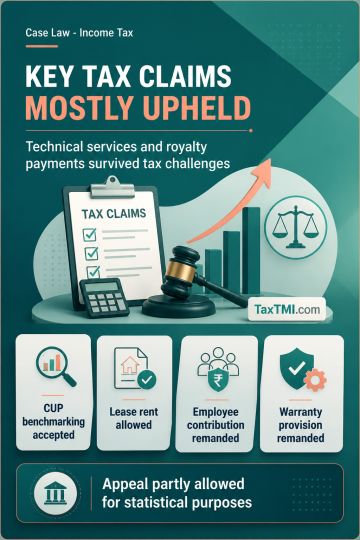
Transfer pricing and tax deductions upheld on established principles, while employee contributions and warranty provisions returned for fresh examinat...
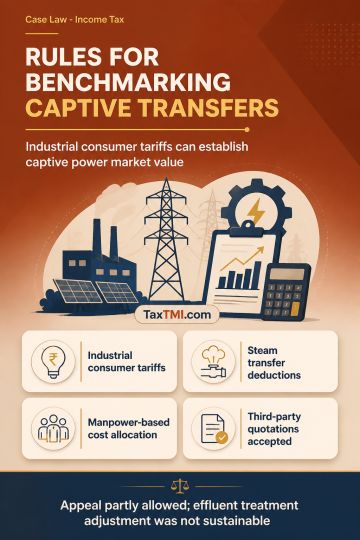
Captive transfer pricing relies on industrial consumer tariffs, while genuine quotations can benchmark effluent treatment transfers under the Other Me...
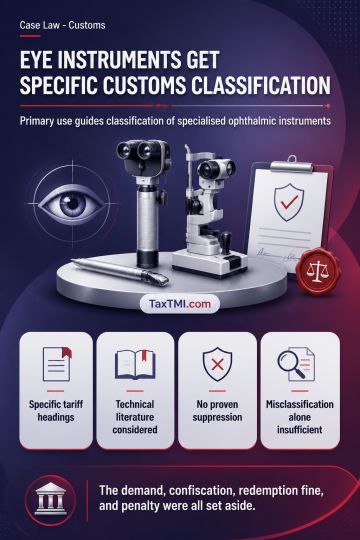
Specific tariff classification for ophthalmic instruments and extended limitation principles determine the treatment of duty demands, confiscation, an...
Integrated golf function determines classification, placing launch monitors and simulators under other golf equipment rather than measuring instrument...
Public servant status under anti-corruption law extends to recognised stock exchange leadership; constitutional and sanction challenges do not succeed...
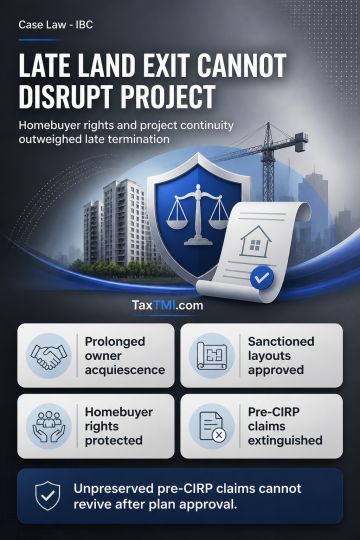
Acquiescence, homebuyer protection and clean-slate resolution principles prevent landowners from disrupting an integrated project through late termina...
Page of 4817
Press 'Enter' after typing page number.
1501 to 1520 of 96333 Results
❮
❯
❯❯
0 / 200
Expand Note
Add to Folder
No Folders have been created
+
Are you sure you want to delete "My most important" ?
Section 107 of the GST law allows an appeal within three months, with only one further month condonable on sufficient cause; once that outer limit expires, neither the Appellate Authority nor the HC can extend time. Applying Supreme Court guidance, the Court held that writ jurisdiction cannot be used to override the statutory limitation scheme, and explanations such as accountant negligence did not justify condonation beyond the cap. Having already pursued the statutory appeal, the petitioner was also not permitted to reopen the show-cause notice or cancellation order in writ proceedings, especially where no appearance was made before the appellate authority despite opportunity. The writ petition was dismissed.
Section 107 of the GST law allows an appeal within three months, with only one further month condonable on sufficient cause; once that outer limit expires, neither the Appellate Authority nor the HC can extend time. Applying Supreme Court guidance, the Court held that writ jurisdiction cannot be used to override the statutory limitation scheme, and explanations such as accountant negligence did not justify condonation beyond the cap. Having already pursued the statutory appeal, the petitioner was also not permitted to reopen the show-cause notice or cancellation order in writ proceedings, especially where no appearance was made before the appellate authority despite opportunity. The writ petition was dismissed.
Note: It is a system-generated summary and is for quick reference only.
 TaxTMI
  TaxTMI
 of 4817









 Join Channel