Tariff classification of vehicle gear components follows the specific gearing entry, displacing motor-vehicle parts classification and related liabili...
Necessary-party requirements limit impleadment of independent entities, while deferred consideration does not create an appealable adverse determinati...
Food supplement classification requires common parlance and authoritative tests, preventing treatment as proprietary Ayurvedic medicines without suppo...
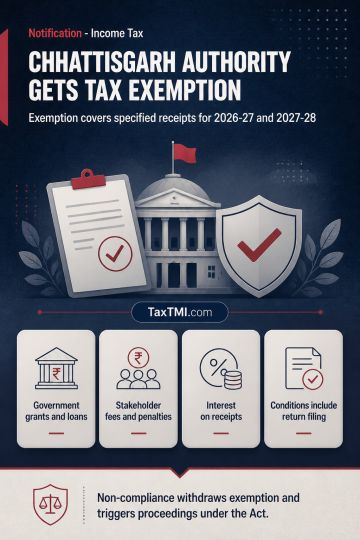
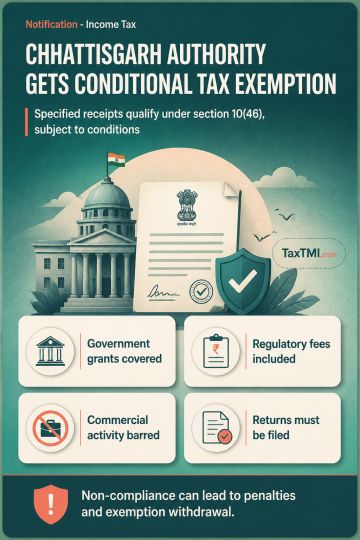
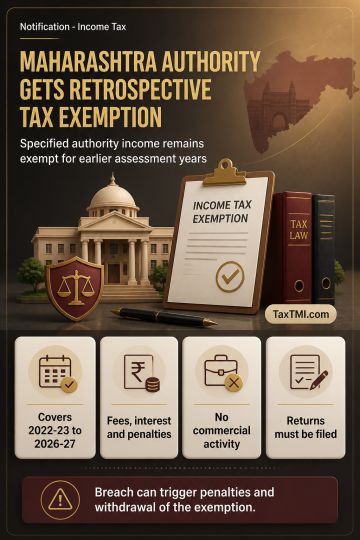
Specified regulatory authority income receives conditional tax exemption, subject to non-commercial activity, unchanged income character, and return f...
Tax exemption for regulatory authority income applies retrospectively, subject to non-commercial activity, unchanged income sources, and return-filing...
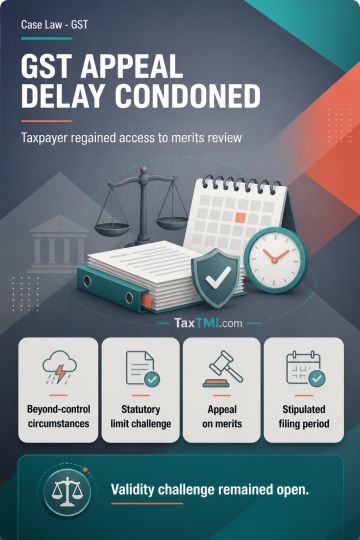
Section 107 of the GST law allows an appeal within three months, with only one further month condonable on sufficient cause; once that outer limit expires, neither the Appellate Authority nor the HC can extend time. Applying Supreme Court guidance, the Court held that writ jurisdiction cannot be used to override the statutory limitation scheme, and explanations such as accountant negligence did not justify condonation beyond the cap. Having already pursued the statutory appeal, the petitioner was also not permitted to reopen the show-cause notice or cancellation order in writ proceedings, especially where no appearance was made before the appellate authority despite opportunity. The writ petition was dismissed.
Section 107 of the GST law allows an appeal within three months, with only one further month condonable on sufficient cause; once that outer limit expires, neither the Appellate Authority nor the HC can extend time. Applying Supreme Court guidance, the Court held that writ jurisdiction cannot be used to override the statutory limitation scheme, and explanations such as accountant negligence did not justify condonation beyond the cap. Having already pursued the statutory appeal, the petitioner was also not permitted to reopen the show-cause notice or cancellation order in writ proceedings, especially where no appearance was made before the appellate authority despite opportunity. The writ petition was dismissed.
Note: It is a system-generated summary and is for quick reference only.
 TaxTMI
  TaxTMI
 of 4823
















 Join Channel


